Football and Cricket: Historical Ties and Shared Rules You Might Not
Explore the deep-rooted historical ties and surprising shared regulations between Football and Cricket in 2026. From the magic of the number 11 to strategic officiating, discover how Rowad 4K brings these global sporting worlds to your screen in stunning detail.
Football and Cricket: Historical Ties and Shared Rules You Might Not Notice
In the global sporting landscape of 2026, as millions of eyes turn toward the stadiums of the United States, Canada, and Mexico for the largest FIFA World Cup in history, and as international cricket undergoes a massive resurgence across Europe and Asia, the sporting world seems split between two primary passions. At first glance, Football, with its high-octane pace and physical intensity, and Cricket, defined by tactical patience and deep mental focus, appear to belong to different universes. However, if we peel back the surface and dive into sporting history, we uncover a complex web of historical connections and shared laws that shaped both games into the global icons they are today.
Grasping this shared heritage and understanding the intricate tactical nuances requires more than just passion—it demands a crystal-clear viewing experience. This is where Rowad 4K steps in as the premier choice for fans in 2026, ensuring every detail is captured, whether it is the subtle late swing of a cricket ball or the razor-thin margin of a crucial offside trap in a high-stakes football match.
1. Shared Origins: The Cradle of British Public Schools
To understand the bond between the "Beautiful Game" and the "Gentleman’s Game," we must travel back to 19th-century Britain. During this era, sports were not just entertainment; they were vital pedagogical tools in elite public schools like Eton and Harrow. Specialized sports roles didn't exist as they do now. Instead, the system relied on seasonal rotation. Students and athletes played Cricket during the warm summer months and transitioned to Football during the cold winter to maintain peak physical fitness.
This direct overlap led to a massive exchange of ideas and organizational structures. Many of the world’s oldest football clubs were actually founded by cricketers who wanted to keep their teams together during the winter off-season. Clubs like Sheffield United and Sheffield Wednesday have deep roots in local cricket clubs. In fact, the original Football Association (FA) drew heavily from the regulatory frameworks and ethics of the Marylebone Cricket Club (MCC), the primary guardian of sporting laws at the time. This shared upbringing established a "sporting spirit" centered on mutual respect and fair play.
2. The Tactical Mystery of Number 11: Engineering the Green Space
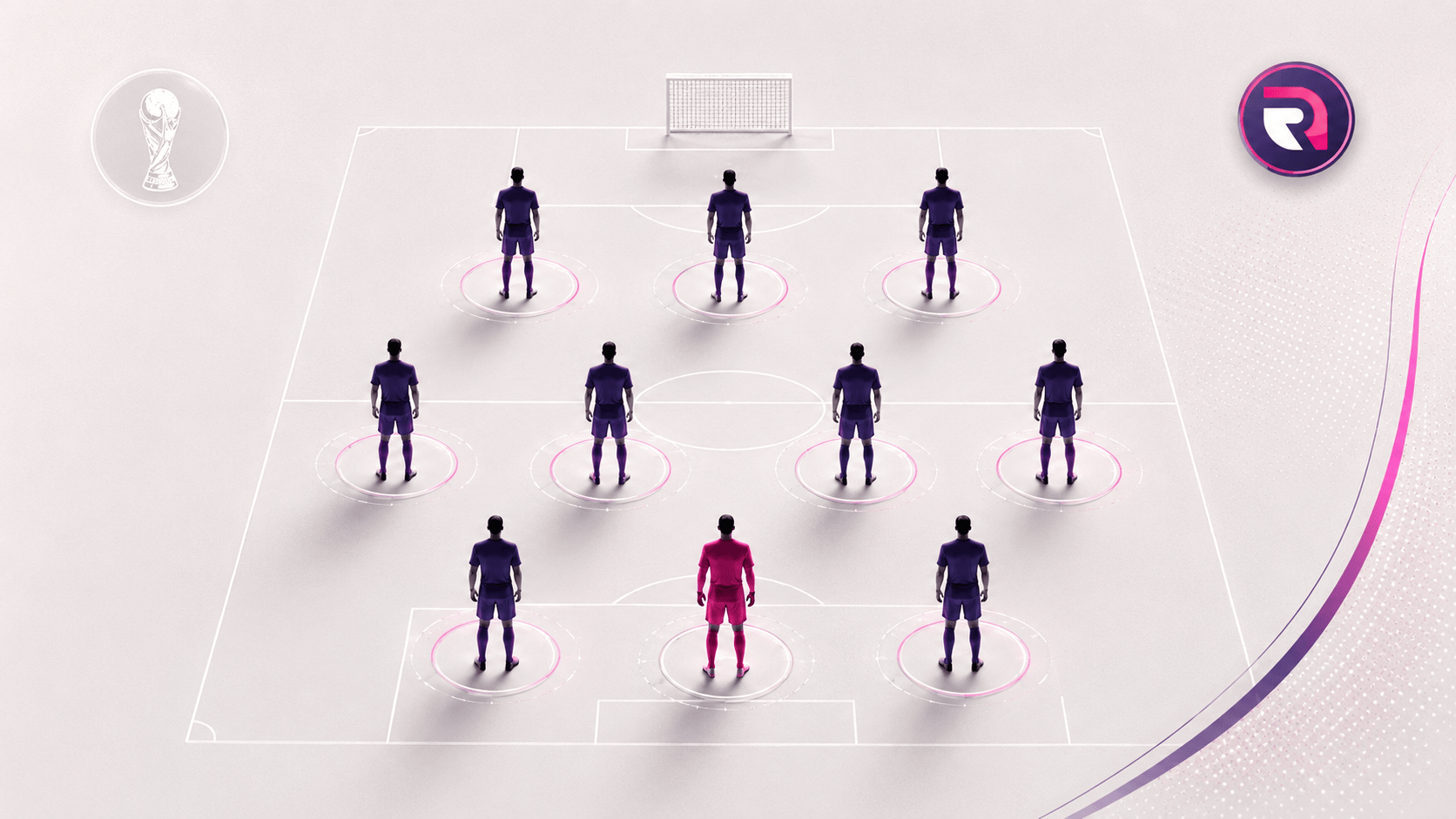
One of the most obvious yet rarely questioned shared rules is the team size. A football team consists of 11 players, exactly the same as a cricket team. This is no coincidence or random choice; it is the result of decades of tactical and spatial experimentation.
In Cricket, early organizers found that 11 players provided the perfect balance for the oval field—enough to cover vast spaces and prevent batters from scoring runs too easily, yet not so many that scoring became impossible. When football began to standardize its laws, the same number was adopted to manage the rectangular pitch. The number 11 proved to be a "magic number," allowing for structured defensive, midfield, and attacking lines while leaving enough space for individual skill and tactical passing.
When you follow these tactical shifts via Rowad 4K, you aren’t just watching players run; you are seeing a masterpiece of movement. The ultra-high definition provided by our servers allows you to track the positioning of all 11 players simultaneously, giving you a professional analyst's perspective from the comfort of your home.
3. The Philosophy of "Spatial Fairness": Offside and the LBW Law
The mechanics of the two sports differ significantly, yet the philosophical core governing them is strikingly similar, particularly regarding "unfair positioning." In football, we have the Offside law, designed to prevent attackers from "camping" in front of the goal, forcing teams to build attacks through tactical merit.
Similarly, Cricket features one of the most sophisticated rules in all of sports: the Leg Before Wicket (LBW) law. This prevents a batter from using their pads or body as an "unfair" shield to protect the wickets instead of using the bat. Both rules represent a philosophy of "spatial and physical justice," ensuring that skill—whether with the foot or the bat—is the ultimate arbiter of victory.
4. The Evolution of Officiating: From "The Gentleman" to VAR and Hawk-Eye
Historically, both sports relied on mutual trust, often referred to as "gentlemanly conduct," where captains resolved disputes themselves. As competition intensified, the need for neutral officials arose. Today, in 2026, officiating technology has reached sci-fi levels in both arenas.
Cricket utilizes Hawk-Eye for millimeter-accurate ball tracking and Snickometer technology for audio detection of bat contact. Football has evolved the VAR (Video Assistant Referee) into a system utilizing AI and semi-automated offside tracking to reduce human error to nearly zero.
This precision technology requires viewers to have screens and streams capable of rendering these details. Watching a high-stakes VAR review or a match-deciding LBW decision demands total clarity. Rowad 4K servers ensure you see the virtual lines and precise angles with the same clarity as the officials in the video room, without any lag to ruin the moment of truth.
5. The Captain’s Burden: Strategic Leadership Inside the Lines
In sports like basketball or American football, the coach on the sidelines is the primary strategist. In Football and Cricket, the Captain on the field carries a massive strategic burden. In Cricket, the captain’s role is arguably the most vital in sports; they decide who bowls, set the fielding placements based on the batter's weaknesses, and manage real-time tactics. In Football, despite the manager’s influence, the captain remains the spiritual leader who organizes the ranks, communicates with officials, and maintains team morale under pressure.
6. Why Rowad 4K is Your Ultimate Choice for 2026 Sporting Events
With the jam-packed 2026 sporting calendar—ranging from the World Cup and the top five European leagues to major international cricket tournaments—fans are often forced to subscribe to multiple expensive platforms. Rowad 4K provides the professional solution for the modern viewer:
- Global Content Aggregation: A single package bringing together all international sports channels, allowing you to switch from a Premier League match to an IPL cricket game at the touch of a button.
- True 4K and HDR Quality: We avoid artificial upscaling. The stream you receive is the raw feed from the source, ensuring vivid colors and ultra-smooth motion (60 FPS), which is vital for tracking high-speed ball movement.
- Low Latency Technology: In 2026, no one wants to hear their neighbors cheering for a goal before they’ve seen it on their own screen. Our servers are designed to minimize delay, keeping you perfectly synced with the live action.
- Overcoming Restrictions: With advanced infrastructure utilizing secure protocols, Rowad 4K ensures total stability even during peak hours and major matches that typically cause standard servers to crash.
- Exceptional Technical Support: Because every minute counts in live sports, our professional support team is available 24/7 to ensure your experience remains flawless.
Final Thought
Football and Cricket are more than just games; they are reflections of the human mind’s evolution in organizing competition and entertainment. Recognizing the deep historical ties and shared laws that protect them adds a new layer of intellectual enjoyment to the viewing experience. In 2026, watching this history unfold in low quality or through a lagging stream is no longer acceptable. Join Rowad 4K today and elevate your sporting experience to the level you deserve, where the world’s greatest sports meet the world’s best streaming technology.
Share this article