France vs England: World Cup Dreams Give Way to a Battle for Bronze
France and England meet in Miami for the 2026 World Cup bronze medal after painful semifinal defeats. Explore the kickoff time, key players, history and tactical storylines
France vs England: World Cup Dreams Give Way to a Battle for Bronze
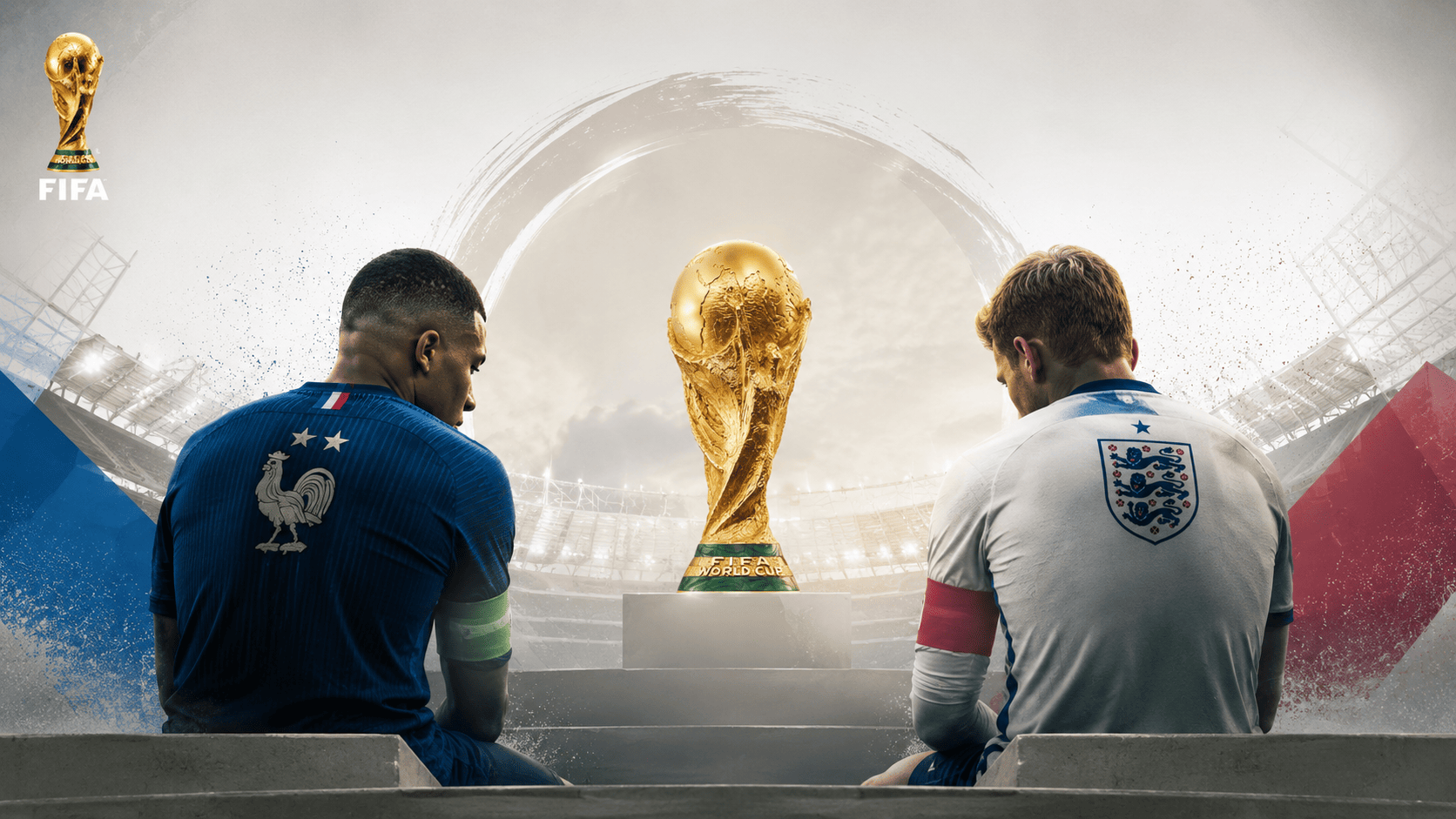
France and England will meet in Miami for the 2026 FIFA World Cup third-place playoff, a fixture neither side expected to contest when the tournament began.
Both entered the competition with realistic ambitions of lifting the trophy. France were attempting to reach a third consecutive World Cup final, while England believed they were ready to return to the title match for the first time since winning the tournament in 1966.
Those ambitions ended in very different semifinal defeats. France were comprehensively outplayed in a 2-0 loss to Spain. England came much closer, taking the lead against Argentina before conceding twice in the closing minutes and losing 2-1.
The bronze-medal game will therefore be more than a contest for third place. It will test which squad can recover emotionally, physically and tactically after seeing its World Cup dream disappear.
France vs England Date, Time and Venue
The match will be played at Miami Stadium, the tournament name used for Hard Rock Stadium in Miami Gardens.
- Fixture: France vs England
- Stage: FIFA World Cup 2026 third-place playoff
- Local date: Saturday, July 18, 2026
- Kickoff in Miami: 5:00 p.m.
- Kickoff in Saudi Arabia: 12:00 a.m. on Sunday, July 19
- Venue: Miami Stadium
The game will take place one day before Argentina face Spain in the World Cup final.
Spain Exposed France’s Structural Weaknesses
France reached the semifinal with six consecutive victories and one of the deepest attacking groups in international football. Kylian Mbappé, Ousmane Dembélé, Michael Olise, Bradley Barcola and Désiré Doué had given Didier Deschamps several ways to break down opponents.
Spain denied them all.
Luis de la Fuente’s side controlled possession, pressed France’s midfield and cut off the passing lanes into Mbappé. Mikel Oyarzabal converted a penalty in the 22nd minute before Pedro Porro doubled the advantage shortly before the hour mark.
France finished with only two attempts on target. Their forwards were kept away from the spaces in which they are normally most dangerous, while repeated technical errors prevented them from playing through Spain’s pressure.
Deschamps later admitted that France had been second best technically, tactically and physically. That admission captured the nature of the defeat: this was not simply a match decided by two isolated moments. Spain controlled the rhythm and forced France to play a game they were unable to solve.
The third-place playoff gives France an opportunity to show that the semifinal was an isolated failure rather than the defining performance of their tournament.
England’s Lead Disappeared in Ten Painful Minutes
England’s semifinal defeat followed a very different script.
After a physical and largely uneventful first half, Anthony Gordon gave Thomas Tuchel’s team the lead in the 55th minute. England were suddenly within touching distance of their first World Cup final in 60 years.
Instead of using the goal as a platform to control possession and attack the spaces Argentina left behind, England gradually dropped deeper. Attacking players were replaced by defenders, the distance between Harry Kane and the midfield increased, and Argentina were allowed to build sustained pressure.
Enzo Fernández equalised in the 85th minute. Lionel Messi then delivered the cross from which substitute Lautaro Martínez headed the winner in second-half stoppage time.
The tactical retreat prompted criticism of Tuchel, even though he insisted that England had tried to remain aggressive. Whatever the original instruction, the effect on the pitch was clear: England stopped carrying a meaningful threat and became increasingly dependent on last-ditch defending.
The match against France offers Tuchel an immediate chance to demonstrate that his team can respond rather than retreat after such a damaging defeat.
Two Very Different Routes to Miami
France’s path to the last four was defined by control and consistency. They entered the semifinal on a six-match winning run, having beaten Sweden 3-0 in the round of 32, Paraguay 1-0 in the round of 16 and Morocco 2-0 in the quarterfinal.
Their campaign had balanced attacking talent with defensive discipline until Spain disrupted both elements.
England’s knockout route was far more dramatic. The Three Lions defeated DR Congo 2-1, survived a chaotic 3-2 match against tournament co-hosts Mexico and then beat Norway 2-1 after extra time, with Jude Bellingham scoring twice.
That ability to survive difficult matches became one of England’s greatest strengths. Against Argentina, however, survival mode arrived too early and eventually turned into passivity.
Didier Deschamps’ Final Match with France
The bronze playoff will mark the end of Didier Deschamps’ 14-year tenure as France coach.
Since taking charge in 2012, Deschamps has restored France as one of international football’s most consistent tournament teams. He led Les Bleus to the Euro 2016 final, won the 2018 World Cup and reached another World Cup final in Qatar four years later.
His tactical pragmatism often attracted criticism, particularly when France appeared to possess enough attacking talent to play more expansively. Yet his record of reaching the latter stages of major tournaments is difficult to dispute.
A victory over England would allow him to leave with another World Cup medal. His successor has not officially been appointed, although former France captain and Real Madrid coach Zinedine Zidane is widely regarded as the leading candidate.
Why the Third-Place Playoff Still Matters
The fixture is often described as the match no player wants to play. It arrives only days after semifinal disappointment and asks teams to rediscover motivation when the main prize has already disappeared.
Yet there are tangible stakes.
The winner receives an official World Cup bronze medal and ends the tournament with a victory. The result also shapes how a team’s campaign is remembered and provides one final opportunity for players competing for individual awards.
There is a financial distinction as well. FIFA’s official distribution awards $29 million to the third-placed team and $27 million to the fourth-placed side.
For England, victory would carry particular historical value. It would represent the country’s best World Cup finish since 1966 and its first successful third-place playoff after defeats to Italy in 1990 and Belgium in 2018.
France have won two previous bronze medals, in 1958 and 1986, while losing the third-place match in 1982. Another victory would add to a modern tournament record that already includes two titles and two runner-up finishes.
Mbappé, Kane and Bellingham Still Have Individual Targets
Kylian Mbappé enters the playoff with eight goals and remains in contention for the Golden Boot.
Lionel Messi also has eight goals, but moved ahead on the assists tiebreaker after creating both of Argentina’s late goals against England. Messi will have another opportunity to add to his total in the final, making the match against England crucial for Mbappé’s chances.
Harry Kane and Jude Bellingham have each scored six times for England. They have carried much of the team’s attacking output and can still finish the tournament among its leading scorers.
That race could influence selection decisions. Coaches often rotate heavily in third-place games, but individual awards and historical milestones may encourage the leading players to start or feature for significant minutes.
France vs England Head-to-Head Record
The Miami meeting will be the 33rd senior international between the two countries.
England lead the overall series with 17 victories. France have won ten matches, with five ending in draws. The historical total, however, is heavily influenced by England’s dominance in the early decades of the fixture.
France have enjoyed the better recent record and won the most recent meeting 2-1 in the quarterfinals of the 2022 World Cup.
The teams have met three times at the World Cup:
- England 2-0 France — 1966 group stage
- England 3-1 France — 1982 first group stage
- France 2-1 England — 2022 quarterfinal
The 2026 playoff will be their first World Cup meeting outside a group or elimination round.
France’s Tactical Priorities
France’s most urgent task is to reconnect their midfield with Mbappé and the other forwards.
Against Spain, their captain received too little service in dangerous areas. When France recovered possession, the first pass was often inaccurate or too slow, allowing Spain to reorganise.
Against England, France are likely to focus on:
- Releasing Mbappé into the space behind the fullbacks
- Moving the ball forward before England can form a compact defensive block
- Giving Olise or Rayan Cherki more freedom between the lines
- Pressing England’s buildup rather than waiting in a passive mid-block
- Using their extra recovery day to impose a higher tempo
The final lineup remains uncertain, and Deschamps may give minutes to players who have featured less frequently. Any rotation, however, will still need to preserve the balance that disappeared against Spain.
England Must Resist the Instinct to Retreat
England’s tactical question is more psychological: can they remain proactive once the match begins to turn in their favour?
Against Argentina, Gordon and Morgan Rogers gave England outlets for carrying the ball into the opposition half. As those outlets disappeared, Kane became isolated and Bellingham was forced to spend more time defending than influencing the game near the penalty area.
To beat France, England will need to:
- Keep the midfield connected to Kane
- Retain attacking players capable of carrying the ball
- Protect the spaces behind the fullbacks against Mbappé
- Avoid conceding uncontested possession around their own box
- Use Bellingham closer to the final third
- Manage any lead without abandoning their attacking structure
France have enough quality to punish the same passive approach that proved costly against Argentina.
Watching the Tactical Battle in 4K
The third-place playoff should offer more than a consolation narrative. It brings together Mbappé’s acceleration, Bellingham’s movement, Kane’s link play and two coaches under pressure to produce a convincing final performance.
With Rowad4K, viewers can access their preferred sports channels across different devices and follow the match with picture quality up to 4K. A stable viewing experience becomes especially valuable in a game likely to feature rapid transitions, close refereeing decisions and frequent tactical changes.
From Mbappé’s positioning against England’s fullbacks to Bellingham’s late runs into the penalty area, the decisive details may occur away from the ball before becoming visible in the final action.
Bronze Will Not Erase the Pain, but It Will Change the Ending
Neither France nor England will pretend that third place was the objective.
France believed they could reach a third consecutive final. England believed they were minutes away from ending a 60-year wait. Those ambitions are gone, but the final match can still determine how each campaign is remembered.
A French victory would give Deschamps a winning farewell and confirm another podium finish for one of the era’s most consistent national teams.
An England victory would secure the country’s best World Cup finish since 1966 and provide a more constructive ending to a tournament that collapsed in ten painful semifinal minutes.
For Mbappé, Kane, Bellingham, Tuchel and Deschamps, Miami is not the destination they wanted. It is, however, their last opportunity to leave the 2026 World Cup with a medal rather than another defeat.
Share this article