Inside the Dressing Room: How Do Players and Coaches Communicate Across Languages?
In modern football, language is no longer a side issue. The 2026 World Cup shows how multilingual dressing rooms use trust, tactical shorthand, interpreters, video and leadership to turn diversity into performance
Inside the Dressing Room: How Do Players and Coaches Communicate Across Languages?
Modern football dressing rooms are no longer simple spaces where a coach gives a loud speech and players run back onto the pitch. They are multicultural, multilingual, emotionally charged environments where tactical detail, trust and timing must all come together quickly. At the 2026 FIFA World Cup, this reality has become even clearer. With 48 national teams, 1,248 players, and squads built from clubs across dozens of countries, football’s global nature is no longer just a slogan. It is a daily communication challenge.
So how does a Japanese player understand a tactical correction in seconds? How does a player born in Europe but representing an African nation process instructions in a different language? How can a foreign coach convince a national dressing room to believe in his plan during the short break between two halves?
The answer is that football is not managed through language alone. It is built through gestures, repetition, video, tactical shorthand, multilingual players, interpreters and emotional intelligence. Words matter, but in elite football, the message matters even more.
Why Language Has Become a Bigger Issue in 2026
The 2026 World Cup is larger than previous editions, not just in the number of teams and matches, but in the range of football cultures it brings together. Many national teams are no longer made up only of players from one domestic league or one linguistic environment. Some players grew up in Europe, others play in the Gulf, South America, Asia or Africa. Within the same squad, one player may speak the national language fluently, another may understand it only partly, and a third may communicate mainly in the language of his club career.
This language question has also appeared outside the pitch. During the 2026 World Cup, the debate around Spanish translation at press conferences showed that language is not a minor operational issue. If journalists and players need a common language to understand questions and answers, the challenge becomes even more intense inside a dressing room, where there is no time for long explanations.
A Dressing Room Is Not a Press Conference
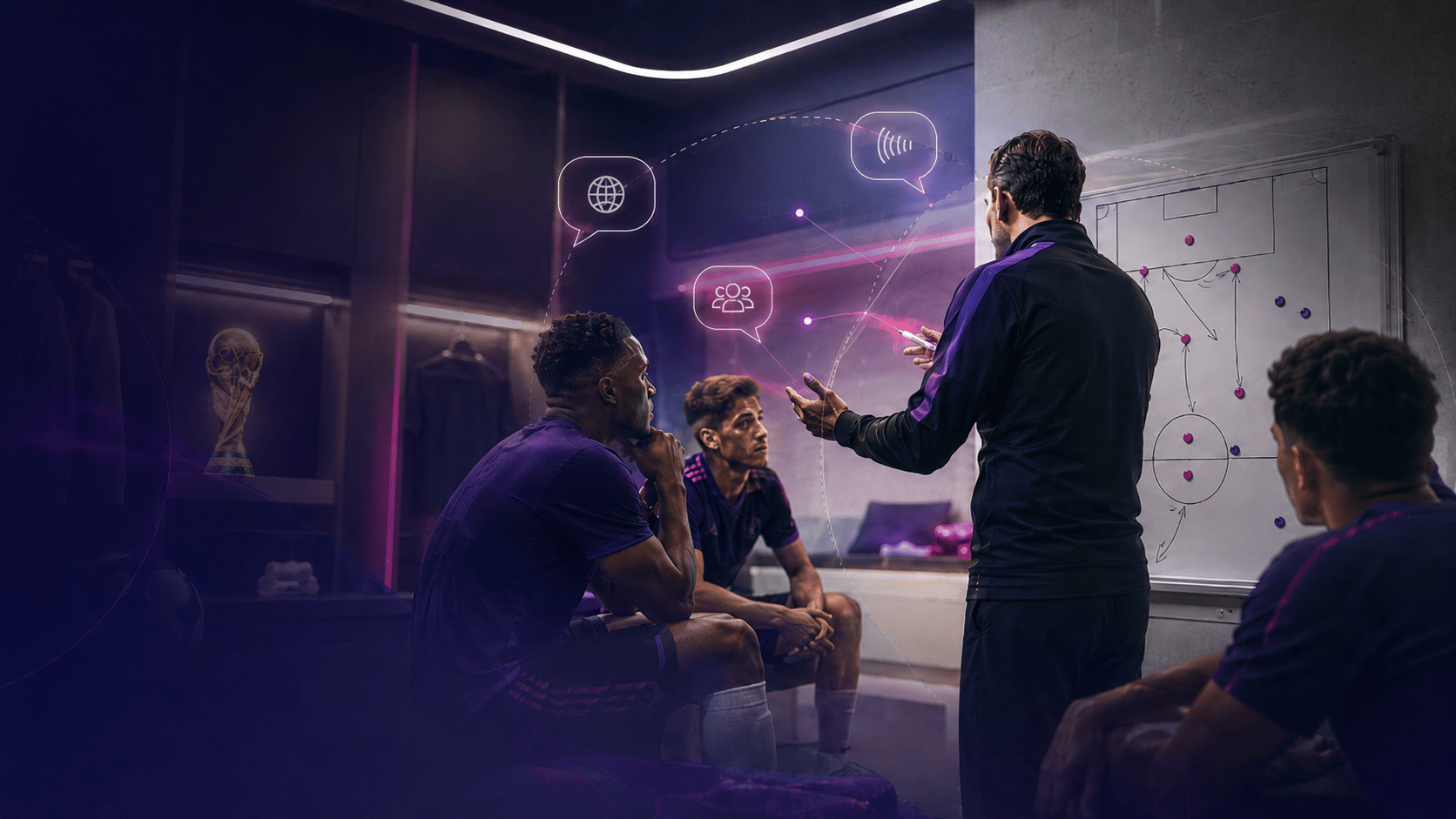
A press conference has microphones, interpreters, questions and structured answers. A dressing room has pressure, emotion and very little time. At half-time, a coach may have only a few minutes to correct a tactical problem, calm the team down and prepare the players for a different second half.
That is why teams rely on a specific football language. Words such as press, cover, switch, hold, step out, stay compact or attack the space can become part of a team’s shared vocabulary. These words are not introduced on matchday. They are built through training, repetition and video work.
A player does not always need to learn an entire language. Often, he needs to learn the team’s dictionary. In football, that can be more important than grammar. A player who does not fully speak the coach’s language may still understand a hand gesture, a tactical board, an arrow on a screen or a video clip showing where he should be positioned when the ball moves wide.
The Foreign Coach: Communication Beyond Words
Foreign coaches leading national teams are now part of modern football. Carlo Ancelotti with Brazil is one of the strongest examples from the 2026 World Cup. His task is not only tactical. He is leading a national team with a powerful emotional identity, a deep football culture and huge expectations. When a coach like Ancelotti speaks about pressure, fear, balance and tactical flexibility, those ideas cannot be reduced to literal translation. Players must feel that the coach understands the identity of the team, not just the shape on the tactics board.
The best coaches do not simply speak. They connect. A coach does not need to master every player’s mother tongue, but he must build enough trust for the message to land. He may use an interpreter, rely on a local assistant, explain through video, or reduce a tactical idea to one clear sentence. What matters is that the meaning survives the translation.
Carlos Queiroz with Ghana offers another example. A Portuguese coach leading an African team at an expanded World Cup must communicate defensive details, psychological messages and tournament management to players shaped by different football backgrounds. When a coach speaks about learning from mistakes before a knockout match, the words said in public are only a small part of the real process. The bigger work happens behind closed doors, where the team must understand and respond quickly.
Multilingual Players: The Silent Leaders
In modern national teams, the captain is not always the only leader. Sometimes the most important bridge in the dressing room is a multilingual player. A player who speaks Arabic and French, Spanish and English, Portuguese and Italian, or another combination can connect groups inside the squad before a formal translation is even needed.
Multilingual players help in three key ways:
- They reduce isolation
A young player who does not fully understand the main language of the squad feels more secure when a teammate can explain things naturally. - They speed up tactical messages
During substitutions, set pieces or touchline instructions, there may not be enough time for a formal translation. A teammate can pass the message immediately. - They prevent language-based cliques
Teams can sometimes split into small groups based on language or background. Players who move between those groups help protect the unity of the dressing room.
That is why language is now part of a player’s professional profile. Learning a new language is not only useful for interviews. It helps a player understand teammates, coaches and even referees.
Video, Gestures and Tactical Boards: The Language Everyone Understands
Football has a powerful visual language. A coach can explain a pressing problem with a video clip more effectively than with a long speech. He can pause an image, circle the player who arrived late, draw an arrow into space or show how a defensive line lost its shape. These tools reduce the need for long verbal explanations.
Video is especially important because it allows players to see the mistake, not just hear about it. A full-back who sees the space behind him does not need a complex translation. A midfielder who watches his pass expose the team understands the point immediately.
At a World Cup, this matters even more. Travel, short recovery windows, different stadiums and emotional fatigue all make short, clear messages more valuable than long tactical lectures. In that environment, simplicity becomes a competitive advantage.
What Happens at Half-Time?
Half-time communication usually works in three layers.
First: The Emotional Message
The coach may begin with calm or urgency. “Stay composed.” “We are still in the game.” “Be braver.” “Win your duels.” These short phrases do not need complex language if they have already become part of the team culture.
Second: One or Two Tactical Adjustments
Smart coaches rarely change everything at half-time. They focus on one or two issues: closing one side, pressing a specific centre-back, blocking passes between the lines or attacking the space behind a full-back. The more instructions there are, the more likely they are to get lost in translation.
Third: Clear Responsibilities
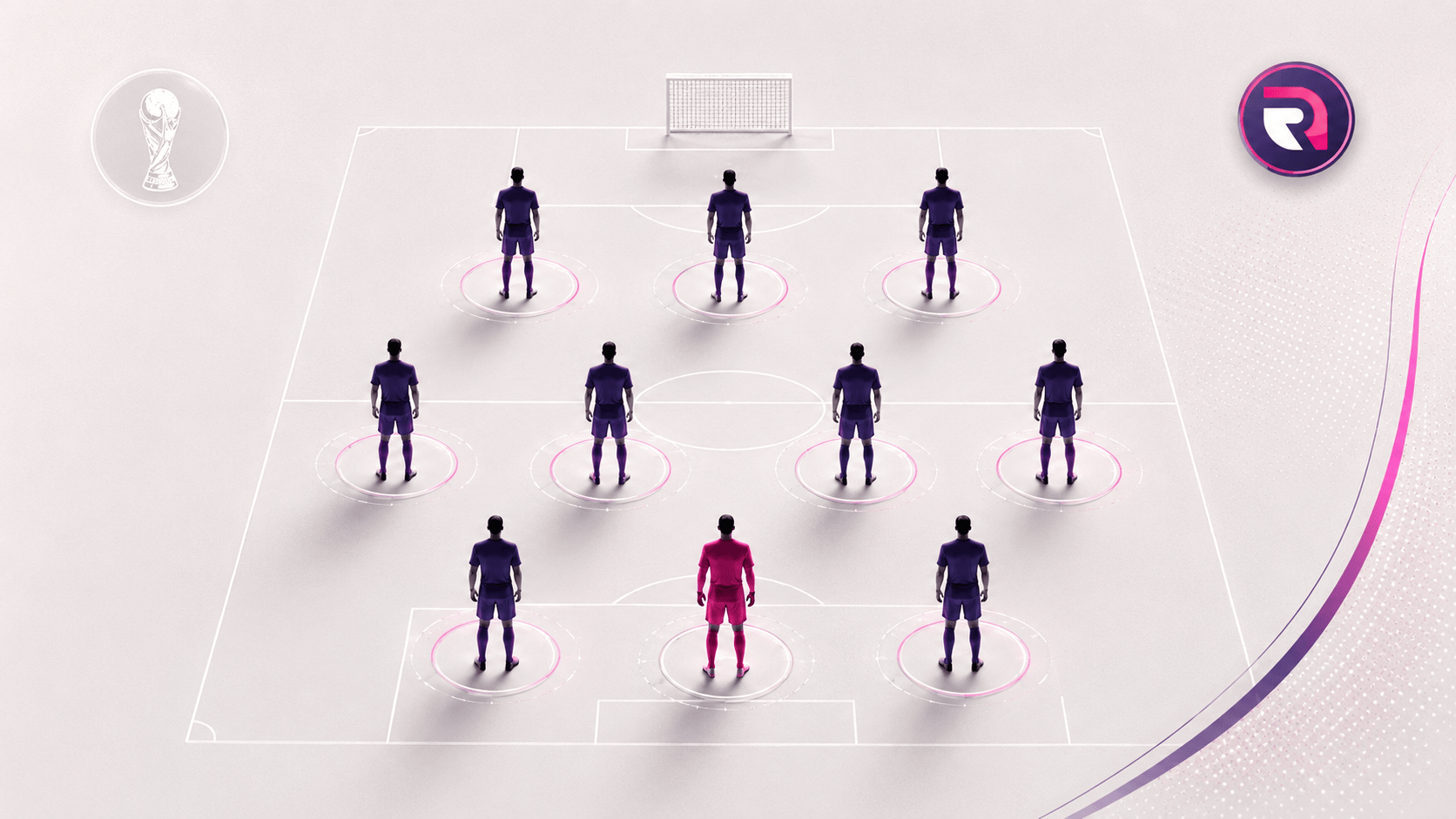
Who presses? Who covers? Who marks the most dangerous player? Who stays back on set pieces? These details must be precise. In football, confusion does not only create misunderstanding. It can create goals against.
Is an Interpreter Enough?
Interpreters matter, but they are not the whole solution. A good football interpreter does not simply translate words. He translates tone, context and tactical meaning. There is a big difference between “press more” and “press intelligently without opening spaces.” Literal translation may carry the sentence, but not always the football idea behind it.
That is why football needs interpreters who understand the game. They need to know tactical terms, player names, roles, abbreviations and sometimes even the emotional code of the squad. At major tournaments, a translation error can be costly, especially when it involves defensive instructions, medical decisions or psychological messages before a penalty shootout.
Technology is becoming more useful, especially in fan services, security and public communication. But inside football, where emotion, timing and nuance matter, the human element remains essential. A player does not only need to understand the sentence. He needs to feel its urgency.
On the Pitch: Fewer Words, Faster Decisions
Once the match starts, long language almost disappears. A player cannot deliver a full sentence during a counterattack. Teams rely on short calls: man on, time, switch, leave it, right, left, press, hold. Some teams agree on specific trigger words for pressing, dropping back or set-piece routines.
But even those short words need training. When a player hears the press call, he must know whether he presses alone, whether the whole team jumps, whether he closes the passing lane or attacks the ball carrier. The word only works because the tactical idea behind it has already been rehearsed.
This is one of the secrets of well-organized teams. They are not only technically strong. They share a decision-making language. It may be English, French, Arabic, Spanish, Portuguese or a mixture of languages. In the end, it becomes the language of the team.
Language as a Psychological Tool
Language does not only carry instructions. It carries belonging. A player in a multicultural national team may feel pulled between different identities: the country where he was born, the country he represents, the league where he plays and the supporters who expect so much from him. When the coaching staff handles that sensitivity intelligently, the dressing room becomes a place of unity rather than division.
A coach who respects a player’s language sends a clear message: you belong here. A player who learns words from his teammates’ language sends a similar message: I am not only playing beside you; I am trying to understand you. These details do not appear in the statistics, but they matter in pressure moments.
Why This Matters to the Viewer
The viewer sees the match for 90 minutes, but not the thousands of communication details that came before it. We do not see how the plan was explained, how the instructions were translated, how a local assistant helped clarify the coach’s idea, or how a multilingual teammate helped a new player understand his role.
That is why watching football closely is more rewarding when the viewing experience is stable and sharp. A high-quality picture allows you to notice the details: the coach’s hand signal, the captain organizing the defensive line, the substitute receiving last-second instructions, or a player explaining a set-piece detail to a teammate. This is where a service like Rowad4K fits naturally into the modern football experience. It is not just about watching the game; it is about seeing the details that shape it, with reliable access, strong picture quality and smooth viewing.
World Cup 2026: A Tournament of Football and Languages
The 2026 World Cup does not only test football quality. It tests how teams manage diversity. A squad built from multiple leagues must build chemistry quickly. A foreign coach must simplify his message. A young player may need a teammate to explain what he missed. An interpreter must understand football well enough to become part of the sporting process, not just a voice in the background.
So the real question is no longer: what language does the team speak?
The better question is: does the team have a shared language for winning?
That language may be made of words, gestures, video clips or trust. But in elite football, the teams that communicate faster think faster. And the teams that think faster make better decisions under pressure.
Conclusion
Football is not universal because it has no language. It is universal because it has learned to create its own. In the 2026 World Cup, with more teams, more players and more cultural backgrounds than ever, communication has become part of the competition itself. A team that does not understand the message quickly can be one step late. In modern football, one step can mean a goal, a missed chance or elimination.
Coaches need clarity. Players need trust. Interpreters need football intelligence. Viewers need the eyes to catch the details. And inside the dressing room, the real match often begins long before the referee blows the whistle.
Share this article