What Are Hydration Breaks at the 2026 World Cup and Why Are They Everywhere?
Hydration breaks have become one of the biggest talking points of the 2026 World Cup. Here is what they mean, why FIFA introduced them, and how they are changing the rhythm, tactics and viewing experience of matches
What Are Hydration Breaks at the 2026 World Cup and Why Are They Everywhere?
At the 2026 FIFA World Cup, the term Hydration Break has become much more than a simple on-screen graphic. It has become one of the tournament’s most debated talking points. Why does the referee stop play midway through each half? Why does the pause last three minutes? Why does it happen even in covered stadiums or in matches where the weather does not appear dangerously hot?
The answer is not just “players need water.” The story sits at the intersection of player welfare, extreme summer heat, an expanded 48-team tournament, tactical disruption, broadcast habits and the changing identity of modern football.
In 2026, FIFA made hydration breaks mandatory in every match. Each game includes a three-minute stoppage midway through each half, regardless of temperature, venue, roof, or air-conditioning. That is why fans feel they are seeing them constantly: they are not occasional anymore; they are built into the tournament structure.
What Is a Hydration Break in Football?
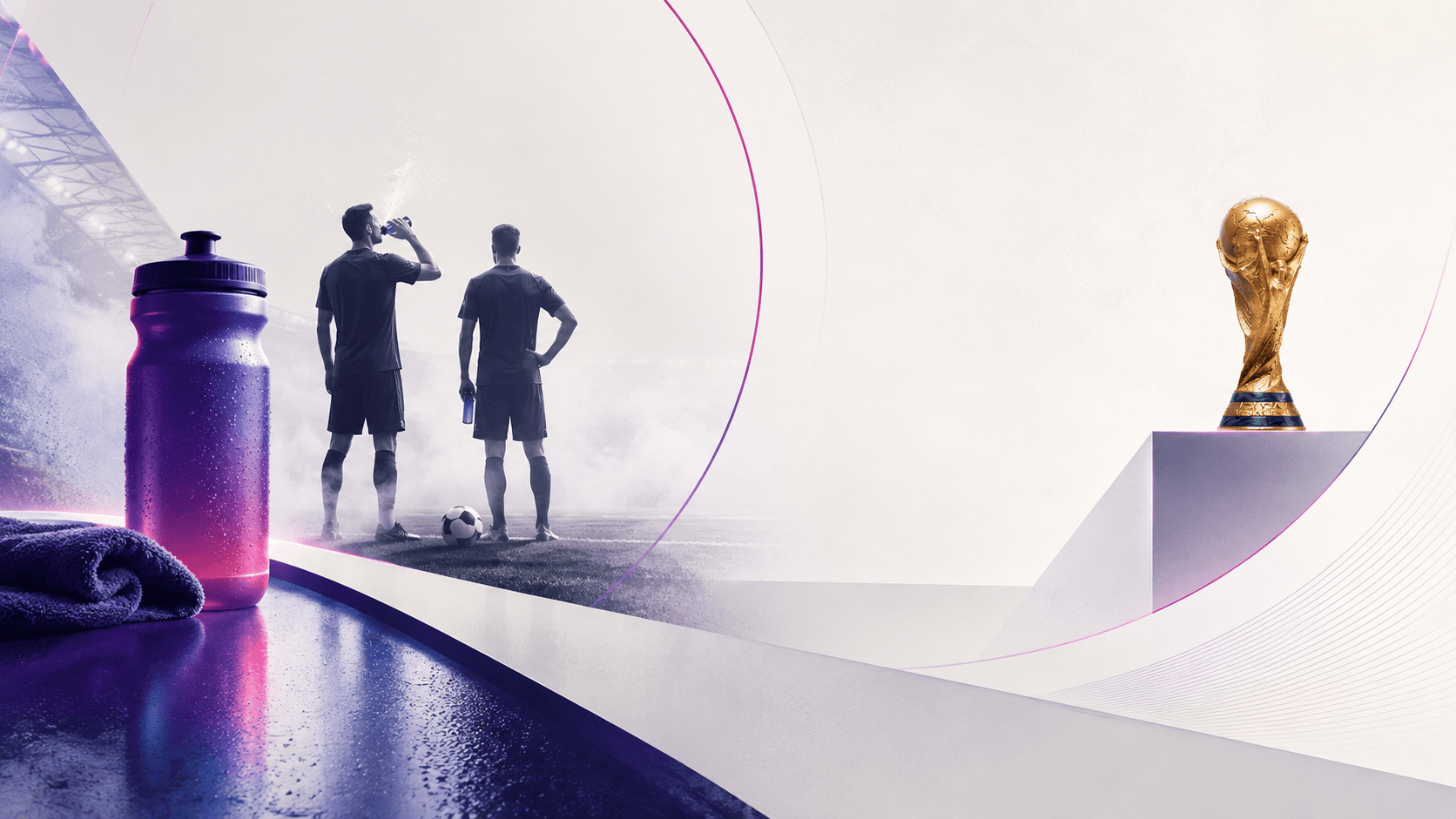
A Hydration Break is a short stoppage that allows players to drink, cool down, recover briefly and receive quick instructions from the coaching staff. In normal football language, many fans may also call it a water break or cooling break, but at the 2026 World Cup it has become a formal, scheduled part of every match.
The break lasts three minutes and usually comes around the 22nd minute of the first half and the 67th minute of the match, which is midway through the second half. FIFA’s approach is clear: the referee stops the game, the players go to the touchline, and play resumes after the break is completed.
That sounds simple, but its impact is bigger than it first appears. Football is built on rhythm. Pressure grows over time. Momentum matters. A team may spend ten minutes suffocating its opponent, only for a mandatory pause to arrive and give the struggling side a chance to reset. This is why hydration breaks have become a tactical issue, not just a medical one.
Why Did FIFA Introduce Mandatory Hydration Breaks?
FIFA’s official reasoning is player welfare. The 2026 World Cup is being played across the United States, Canada and Mexico during June and July, with matches spread across very different climates. Some venues face high heat and humidity; others are cooler; some stadiums have roofs and air-conditioning; others are open-air.
Instead of applying hydration breaks only when temperatures pass a certain threshold, FIFA chose a uniform rule. Every team gets the same structure. Every coach gets the same pause. Every match has the same framework. FIFA argues this creates equal conditions and avoids a situation where one match gives coaches a mid-half reset while another does not.
There is also important recent context. The 2025 FIFA Club World Cup in the United States exposed players and coaches to severe heat concerns. Several complaints were raised during that tournament, and those experiences helped shape the thinking behind the 2026 World Cup policy. ESPN noted that the Club World Cup heat experience was a major background factor in FIFA’s decision to present the breaks as a welfare measure.
Why Are Hydration Breaks So Frequent at the 2026 World Cup?
The main reason is straightforward: they are mandatory in every match.
Previous tournaments and competitions used drinks breaks in specific conditions, often depending on heat levels or the referee’s discretion. The 2026 World Cup is different. Every match gets two hydration breaks in normal time.
With 104 matches in the expanded tournament, that can mean up to 208 scheduled hydration stoppages across normal time alone. So the audience is not imagining it. Hydration breaks really are appearing again and again because they have become part of the tournament’s operating model.
The second reason is the weather. As the knockout rounds progressed, extreme heat became a serious concern in parts of the United States and Canada. Reuters reported that a “heat dome” was affecting the central and eastern United States and parts of Canada, with heat index values in some regions expected to reach dangerous levels. AP also reported extreme heat concerns around host cities such as Philadelphia, Kansas City, Boston and the New York/New Jersey area.
This does not mean every match is played in unbearable heat. It means FIFA is dealing with a tournament spread across many cities, climates and stadium types. Some venues, including Atlanta, Dallas and Houston, have retractable roofs and air-conditioning. But fan zones, transport routes, parking areas and outdoor celebrations can still expose supporters and staff to dangerous conditions.
Is It Only About Drinking Water?
Not really. The name suggests a simple water break, but the three-minute pause does more than help players drink.
From a medical point of view, it allows players to reduce heat stress, take fluids, use cold towels and briefly lower the physical burden of playing in difficult conditions. AP cited experts warning that even elite athletes are vulnerable to exertional heat illness, which can involve fatigue, headaches, nausea, dizziness, cramps, dehydration and impaired performance.
From a football point of view, however, those three minutes can change the match. Coaches can speak directly to the team, adjust pressing triggers, change defensive spacing, calm players down or prepare a new attacking route. A team under pressure may survive a difficult phase simply because the break arrives at the right time.
That is why many coaches and fans now see hydration breaks as mini timeouts. They are presented as welfare tools, but they also function as tactical reset points.
How Do Hydration Breaks Change Match Rhythm?
The biggest criticism is that they interrupt football’s natural flow. Football is not traditionally a stop-start sport. Its drama often comes from continuous pressure, fatigue, emotional swings and the way momentum builds without giving players constant tactical timeouts.
England manager Thomas Tuchel said hydration breaks were affecting matches more than he initially expected. He argued that they interrupt momentum and change the identity of the game, making matches feel closer to four quarters than two halves. Interestingly, he also admitted that, as a coach, he can benefit from the chance to gather his players, but he still prefers football when it is played with more continuity.
Paraguay coach Gustavo Alfaro was even more direct, saying the breaks should be used only in special cases and that football’s continuity is being broken. His criticism reflects a wider fear: if football becomes too segmented, it loses part of what makes it different from sports that are naturally built around repeated stoppages.
Why Do Some Fans Think They Are Advertising Breaks?
Another layer of controversy comes from broadcasting. Some viewers have noticed that hydration breaks create convenient windows for commercials or sponsored content. This has led to suspicion that the rule may be partly commercial.
FIFA President Gianni Infantino rejected that argument, saying the decision is purely sporting and not financial. He said FIFA’s commercial agreements were already signed in advance and that the main objectives were player welfare, performance and equal conditions across the tournament.
Still, the audience experience matters. Even if FIFA’s official explanation is player welfare, the visible effect for viewers in some countries is that a live football match suddenly contains something that feels like an advertising break. For many fans, that is culturally uncomfortable. They are used to commercials before the match, at half-time and after the final whistle, not during the emotional flow of a half.
Are Hydration Breaks Fair?
In one sense, yes. The rule applies to everyone. Every team knows there will be a break in each half. Every coach can prepare for it. Every player expects it.
But fairness in football is not only about applying the same rule. It is also about how that rule affects different playing styles. A team that relies on intense pressing may suffer when its momentum is interrupted. A team that prefers slower rhythm and tactical resets may benefit. A coach who is excellent at mid-game correction may gain more from the pause than a coach who relies on emotional flow and continuity.
So hydration breaks are formally equal, but their tactical impact is not always neutral.
Who Benefits Tactically?
Teams with strong coaching structures can use the break as a weapon. Three minutes can be enough to fix a pressing shape, calm a defensive line, adjust marking assignments or prepare a targeted overload on one side of the pitch.
Teams under pressure can also benefit. If a side is being dominated, the break gives it time to breathe, reorganize and reduce the opponent’s emotional momentum. On the other hand, the team in control may see the pause as a disruption.
For viewers, this creates a new way to watch the game. After every hydration break, look for changes:
- Did the pressing shape change?
- Did one full-back stop advancing?
- Did a midfielder drop deeper to help build-up play?
- Did the team under pressure regain composure?
- Did the tempo slow down or suddenly accelerate?
These are not random details. In the 2026 World Cup, the hydration break can be the moment where the match quietly changes direction.
What Does This Mean for the Viewing Experience?
For casual fans, the break may feel frustrating. It interrupts immersion. It pauses the emotional rise of the game. It can also create confusion when viewers are not sure whether the stoppage is medical, tactical or commercial.
For serious football followers, however, it can become a useful analytical moment. The key is to watch what happens immediately after play resumes. This is where tactical changes become visible.
That is also where a strong viewing setup matters. With Rowad4K, the value is not only sharper picture quality; it is the ability to follow small details without losing the rhythm of the match. A coach’s gesture, a player shifting position, a team changing its build-up shape after the break — these are details that make football richer when the picture is clear and the viewing experience is stable.
In a tournament where tiny tactical moments can decide knockout matches, watching with clarity is part of understanding the game.
Are Hydration Breaks Here to Stay?
That remains uncertain. The 2026 World Cup may become a test case for future tournaments. FIFA may decide that mandatory breaks are the safest and fairest option. Or it may later adjust the rule, making breaks conditional again based on heat, humidity, venue conditions or medical thresholds.
The debate will not end quickly because both sides have valid points. Player safety is not negotiable, especially when extreme heat can affect performance and health. At the same time, football’s identity is built around continuity, and fans are right to be cautious about changes that make the sport feel more segmented.
The future may require a smarter middle ground: better scheduling, more night matches in hot cities, improved cooling infrastructure, stronger protection for fans, and hydration breaks that are applied with medical precision rather than blanket uniformity.
Final Take: A Necessary Protection or a Change to Football’s Identity?
Hydration breaks at the 2026 World Cup are both a safety measure and a football debate. They exist because FIFA is trying to protect players in a long, hot, expanded tournament. But they have become controversial because they influence tactics, disrupt rhythm and create new commercial-looking pauses within the match.
They are everywhere because FIFA made them mandatory, not because every match is equally hot. That distinction is the heart of the discussion.
The 2026 World Cup may be remembered not only for its results, upsets and stars, but also for showing how climate, player welfare and broadcasting pressure are reshaping the way football is played and watched. Before the break, one match may be unfolding. After it, another may begin.
Share this article