Jürgen Klopp Officially Named Germany Head Coach Until the 2030 World Cup
Jürgen Klopp has officially signed a four-year contract to coach Germany through Euro 2028 and the 2030 World Cup. Here is how the deal happened, why Julian Nagelsmann departed and what the appointment means for the national team.
Jürgen Klopp Officially Named Germany Head Coach Until the 2030 World Cup
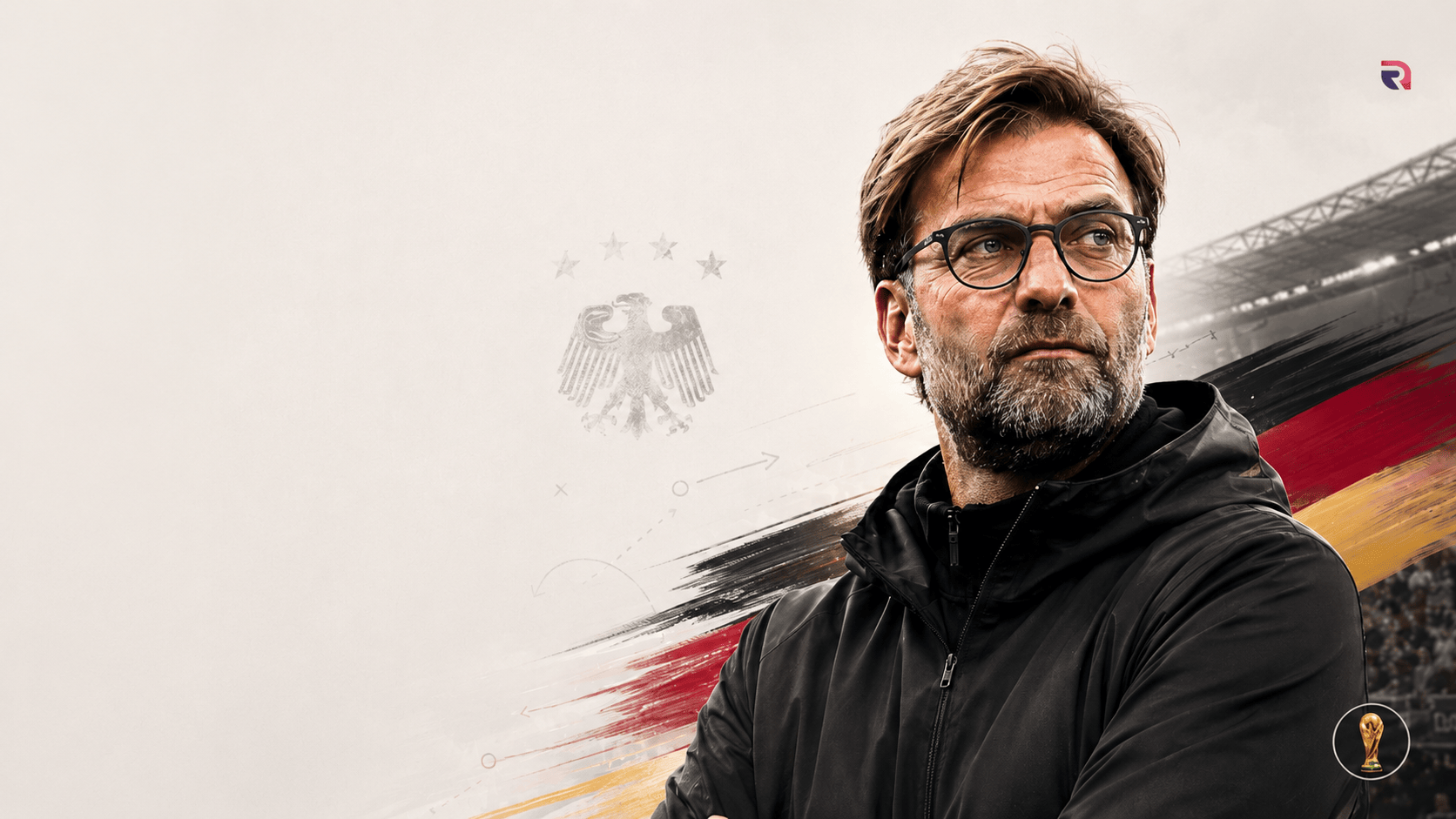
The speculation is over. Jürgen Klopp is officially the new head coach of the Germany national team, having signed a four-year contract with the German Football Association on July 24, 2026.
Klopp will formally begin the job on August 15 and lead Germany through Euro 2028 and the 2030 World Cup. He succeeds Julian Nagelsmann, whose tenure ended following Germany’s shock elimination by Paraguay in the round of 32 at the 2026 World Cup.
The appointment brings one of Germany’s most accomplished club coaches into international management for the first time. It also represents a major attempt by the DFB to restore belief around a national team that has now endured three consecutive disappointing World Cup campaigns.
Klopp Is No Longer a Candidate — He Has Signed the Contract
Germany confirmed Klopp’s appointment after the supervisory board and shareholders’ meeting of the DFB’s operating company unanimously approved the proposal presented by federation president Bernd Neuendorf and vice-president Hans-Joachim Watzke.
The 59-year-old signed at the DFB Campus in Frankfurt, committing himself to an entire four-year cycle rather than a short-term recovery operation.
Klopp described the national team as an institution capable of bringing Germans together in a unique way. Neuendorf, meanwhile, said the former Borussia Dortmund and Liverpool coach had been the federation’s clear preferred choice once Nagelsmann left.
That distinction matters. Klopp was not simply the most famous name on a broad shortlist. The DFB structured its search around securing him and moved quickly once he indicated that he was willing to discuss the role.
Why Did Julian Nagelsmann Leave Germany?
Nagelsmann entered the 2026 World Cup under contract through 2028. Germany successfully progressed from the group stage but failed at its first knockout hurdle, drawing 1-1 with Paraguay before losing the penalty shootout 5-4.
The performance exposed familiar weaknesses. Germany circulated the ball too slowly, created too few clear chances and struggled to break down a disciplined opponent. As the pressure increased, controlled possession gradually gave way to direct deliveries and increasingly desperate attacks.
The result extended Germany’s poor World Cup sequence. The four-time champions had already been eliminated in the group stage in both 2018 and 2022, and they have not won a World Cup knockout match since defeating Argentina in the 2014 final.
Nagelsmann initially suggested that he was prepared to continue. After reflecting on the tournament, however, he asked to be released from his contract, arguing that the players deserved a fresh start without the weight of another major disappointment.
The DFB approved his departure on July 3 and announced in the same statement that it intended to approach Klopp, who had already signalled a basic willingness to consider the position.
How the DFB Secured Klopp
Formal discussions gathered pace during the latter stages of the World Cup. Neuendorf and Watzke met Klopp in New York, and by July 11 the DFB said the parties had reached an understanding on the key elements of a possible contract.
At that stage, two hurdles remained: formal approval from the DFB’s governing bodies and an agreement with Klopp’s employer, Red Bull.
Klopp had joined Red Bull as Head of Global Soccer in January 2025. The role allowed him to work on long-term football strategy, coaching development and talent pathways across the company’s network of clubs without taking charge of one team on a daily basis.
Red Bull eventually agreed to release him early so that he could concentrate exclusively on Germany. The DFB stressed that the national-team job required complete focus and could not be combined with divided executive responsibilities.
Rather than paying a conventional compensation fee, the federation agreed to donate €1 million to the Wings for Life foundation and stage three Germany internationals in Leipzig before the end of Klopp’s contract.
Klopp’s Germany Coaching Staff
Klopp will be joined by three assistants:
- Peter Krawietz, a trusted colleague from Mainz, Borussia Dortmund and Liverpool.
- Pepijn Lijnders, who played an influential role in Liverpool’s coaching and tactical work.
- Sven Bender, the former Germany and Dortmund midfielder who also has previous experience inside the DFB’s youth structure.
Krawietz and Lijnders understand Klopp’s methods, communication style and training priorities. Their arrival should reduce the time required to establish a functioning coaching structure.
Bender offers a different kind of value. He understands the German football environment, has worked with national youth teams and can help connect Klopp’s ideas with the culture surrounding the DFB and Bundesliga-based players.
Why Klopp Fits Germany’s Current Situation
Klopp’s greatest strength may be his ability to build a collective identity rather than simply manage a collection of talented individuals.
At Borussia Dortmund, he developed a young, aggressive team that won consecutive Bundesliga titles and reached the Champions League final. At Liverpool, he gradually transformed an inconsistent squad into Premier League, Champions League and Club World Cup winners.
Germany’s current problem is not an absence of individual quality. The deeper issue is that talented players have too often looked disconnected from one another, particularly when opponents defend deep or disrupt the original tactical plan.
Klopp has repeatedly built teams whose players understand how their roles fit into a wider structure. His communication can also help rebuild the emotional relationship between the national side and supporters who have become frustrated by repeated tournament failures.
Can Klopp’s Style Work in International Football?
Klopp is associated with intense pressing, rapid transitions and immediate reactions after possession is lost. His best teams have played with energy, but their success was never based on running alone. The movement was coordinated, the pressing triggers were shared and the players understood how to protect the spaces behind them.
International football presents a different challenge. Klopp will not have a lengthy pre-season or daily training sessions. Players will arrive from clubs using different formations, pressing systems and physical routines.
He therefore cannot simply recreate Liverpool’s tactical model in full. Germany will need a streamlined version built around a small number of clear principles:
- When and where the press begins.
- How the midfield protects the defence.
- How the team attacks compact opponents.
- What happens immediately after possession is lost.
- Which players form the stable core of the side.
The objective should not be to make Germany play at maximum speed in every moment. The objective is to increase the speed and coordination of the moments that matter.
Klopp’s Biggest Challenges
Creating a Recognisable Identity
Germany have changed systems, positions and personnel frequently in recent years. Klopp must establish a reliable structure that remains useful when the opening plan stops working.
Breaking Down Deep Defences
The Paraguay defeat demonstrated that possession without penetration is not enough. Germany need better movement between the lines, faster combinations and a clearer balance between central attacks and width.
Protecting Transitions
Aggressive pressing can become dangerous when it is not properly coordinated. Klopp must ensure that the defenders are not repeatedly left exposed whenever Germany lose the ball high up the pitch.
Managing the Generational Shift
The new coach will need to balance experience with renewal. Some players may remain central through Euro 2028, while others will be developed with the 2030 World Cup in mind.
Controlling Expectations
Klopp’s reputation will generate immediate optimism. That enthusiasm can help the team, but it may also create unrealistic demands for instant success. Germany should expect visible progress quickly without pretending that several years of structural problems can be solved in one international window.
When Is Klopp’s First Germany Match?
Klopp’s debut will come away to the Netherlands in Amsterdam on September 24, 2026, in the UEFA Nations League.
Germany will play four matches during his first international window:
- Netherlands vs Germany — September 24.
- Germany vs Greece — September 27 in Augsburg.
- Germany vs Serbia — October 1 in Munich.
- Greece vs Germany — October 4 in Thessaloniki.
The four games are scheduled for 9:45 p.m. Saudi time. Germany share Nations League Group A2 with the Netherlands, Greece and Serbia.
This schedule gives Klopp an immediate opportunity to assess his squad, but it also leaves little room for gradual experimentation. Four competitive matches in a short period will require rotation, careful physical management and early decisions about the team’s tactical foundation.
Per Mertesacker Joins the Wider Rebuild
Klopp’s appointment is part of a broader restructuring at the DFB. Former Germany defender Per Mertesacker will become managing director for sport on January 1, 2027.
Mertesacker will oversee the national teams and the DFB academy after spending eight years leading Arsenal’s youth academy. The federation clearly wants a closer connection between player development, youth internationals and the senior national side.
That partnership could be important. Klopp will focus on the senior team’s performances and identity, while Mertesacker will have a wider responsibility for creating a sustainable pathway for future internationals.
What the Appointment Means for Supporters
Klopp’s arrival gives Germany matches a renewed sense of anticipation. Supporters will be watching for more than results in September. They will want to see whether the team presses together, moves the ball with greater purpose and responds differently when matches become difficult.
For viewers following the opening Nations League window, Rowad4K offers a convenient way to access preferred channels and content across supported devices, with stable viewing and picture quality available up to 4K. That becomes particularly useful during international periods featuring several major matches in quick succession.
The excitement is justified, but Klopp’s name alone will not repair the national team. His success will depend on player selection, tactical clarity, physical execution and the DFB’s willingness to give the project enough stability to develop.
A Major Appointment, Not a Guaranteed Solution
Hiring Jürgen Klopp is Germany’s most ambitious coaching decision in years. He possesses the experience, personality and developmental record required to lead a genuine rebuild.
The original question — whether Klopp would coach Germany after the 2026 World Cup — has now been answered. He has signed, his staff is in place and his contract runs through 2030.
The more important question is what comes next. Klopp must turn public enthusiasm into a functional team, restore clarity to Germany’s football and build a side capable of competing deep into Euro 2028 and the 2030 World Cup.
The appointment creates hope. Turning that hope into trophies will require far more than a famous name.
Share this article