De la Fuente Outmanoeuvres Deschamps as Spain Shut Down France to Reach the 2026 World Cup Final
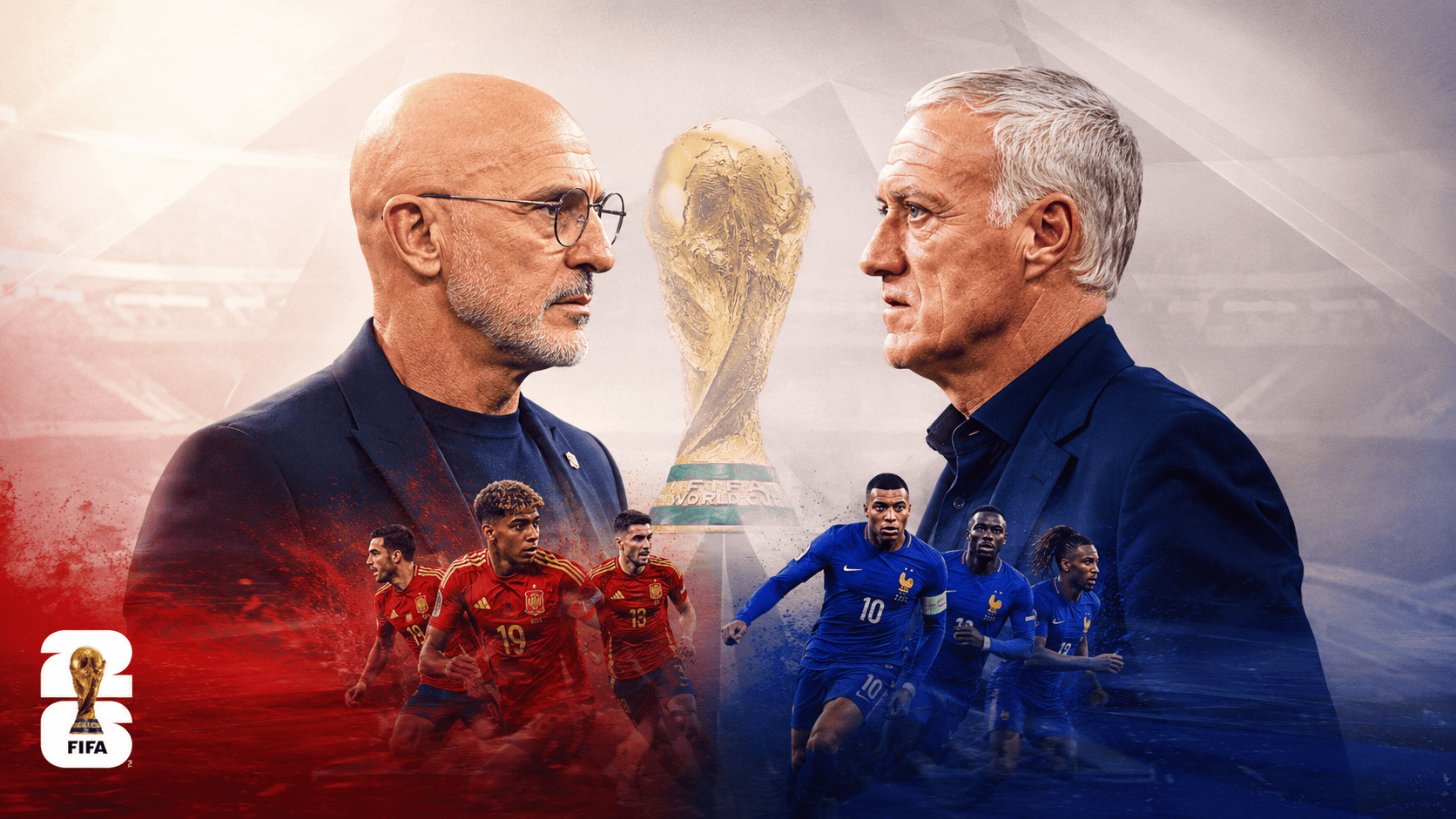
Spain neutralised France’s star-studded attack and secured a 2-0 semifinal victory, with De la Fuente’s controlled system overpowering Deschamps’ front four
De la Fuente Outmanoeuvres Deschamps as Spain Shut Down France to Reach the 2026 World Cup Final
Spain did not need an end-to-end contest or a flood of chances to prove their superiority over France. They needed a clear plan, near-perfect execution and the discipline to keep the match inside the tactical boundaries established by Luis de la Fuente.
The 2-0 victory over France in the 2026 World Cup semifinal was more than the result that sent Spain into only their second global final. It was a triumph of structure over individual firepower, collective positioning over isolated talent and control over chaos.
Mikel Oyarzabal converted a 22nd-minute penalty before Pedro Porro doubled the lead in the 58th minute. Between those goals, and throughout the closing stages, France failed to turn the quality of Kylian Mbappé, Ousmane Dembélé, Michael Olise and Bradley Barcola into meaningful pressure.
Didier Deschamps’ side managed only two shots on target. Mbappé attempted three shots, but none tested Unai Simón. Against the tournament’s most intimidating attack, Spain recorded their sixth clean sheet in seven games.
A Victory More Convincing Than the Scoreline
A penalty and one flowing second-half move decided the scoring, but the tactical margin was much wider than two goals.
France arrived in Arlington after six consecutive victories and had looked capable of hurting opponents in several ways. Their pace in transition, Olise’s creativity and Mbappé’s finishing had made them one of the competition’s most dangerous teams.
Spain removed the conditions that allowed those qualities to function.
The final possession split was relatively close, with Spain holding 51% to France’s 49%. Yet possession percentages alone did not describe the contest. Spain completed 487 passes to France’s 408, determined where the ball was circulated and repeatedly forced their opponents to defend for longer than they wanted.
France’s expected-goals output fell to approximately 0.31, compared with a tournament average of around 2.4 per game before the semifinal. Spain generated roughly 1.7 xG while prioritising control rather than relentless chance creation.
De la Fuente Keeps His Balance as Deschamps Loads the Attack
The tactical contrast was visible from the confirmed lineups.
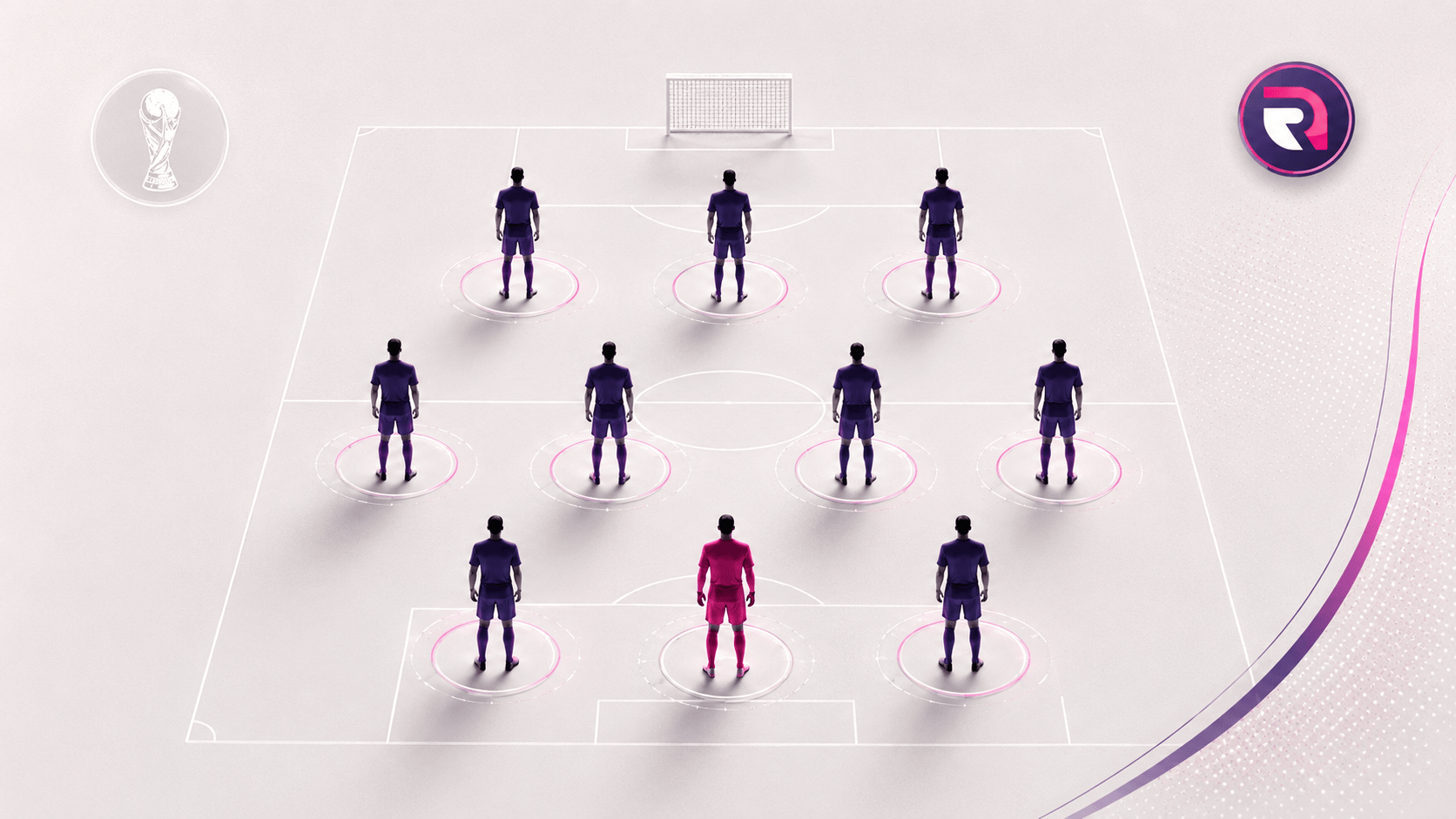
De la Fuente retained the side that had defeated Belgium in the quarterfinals. Unai Simón started behind Pedro Porro, Pau Cubarsí, Aymeric Laporte and Marc Cucurella. Rodri anchored a midfield that also included Fabián Ruiz and Dani Olmo, while Lamine Yamal, Álex Baena and Oyarzabal completed the attack.
Keeping Pedri on the bench was a significant decision. De la Fuente selected Fabián for his physical presence, off-ball movement and ability to support Rodri when Spain lost possession. The objective was not simply to keep the ball. Spain wanted an attacking structure that would remain secure against French transitions.
Deschamps restored Aurélien Tchouaméni after injury and paired him with Adrien Rabiot. Ahead of them, Dembélé, Olise and Barcola supported Mbappé.
The French lineup appeared aggressive, but its 4-2-3-1 left only two orthodox central midfielders against Spain’s rotating network. Rodri, Fabián and Olmo operated inside, while Oyarzabal dropped away from the centre-backs and Baena narrowed his position.
France were not merely outnumbered in certain moments. Spain consistently created better passing angles. Whenever one French player stepped forward to press, a Spanish option appeared behind or beside him.
Why France’s Press Failed
Before the game, Deschamps insisted that France would contest possession rather than sit back and wait for counterattacks. The execution never matched that intention.
The French press lacked coordination. Mbappé would occasionally close down the ball without the midfield advancing behind him. At other moments, Olise or Dembélé moved forward while a large gap remained between the front four and the central midfield pair.
Spain used short passing and constant movement to escape those situations. Even when France regained possession, their first touch or first forward pass was frequently rushed. Spain’s counterpress then recovered the ball before a transition could develop.
Mbappé later acknowledged that communication during the press had been insufficient and that France’s first touches and passes were not worthy of a World Cup semifinal. Those technical errors were also the consequence of Spain’s positioning. French players rarely received the ball without immediate pressure.
Yamal’s Awareness Creates the Opening Goal
The first goal arrived in the 22nd minute and demonstrated Spain’s alertness inside the penalty area.
Cucurella delivered a deep cross towards the far side. Lucas Digne attempted to control and clear the ball, but Lamine Yamal anticipated the situation and attacked the space behind the French defender. Digne’s attempted clearance caught the Spanish winger, and a penalty was awarded.
One day after turning 19, Yamal produced a mature and disciplined performance. He did not spend the game forcing dribbles or chasing an individual highlight. He took fewer risks, protected possession and selected his attacking moments carefully.
Oyarzabal drove the penalty beyond Mike Maignan for his fifth goal of the tournament. It was the first time France had fallen behind in their seven World Cup matches.
The goal immediately changed the tactical demands of the contest. France had to move higher and accept greater risks, while Spain could circulate the ball and make their opponents run.
Porro’s Goal Captures Spain’s Collective Identity
The second goal was an even clearer expression of Spain’s football.
The move began deep in their own half. Spain played through French pressure with short combinations before finding Pedro Porro on the right. The full-back passed into Dani Olmo and immediately continued his run beyond the defensive line.
Olmo returned the ball despite pressure from Dayot Upamecano, allowing Porro to finish calmly past Maignan in the 58th minute.
It was more than a neat one-two. The goal was built from a sequence of correct decisions: composure near Spain’s own penalty area, movement to draw out the press, a precisely timed pass and the full-back’s recognition of the space behind France.
Yamal had a goal ruled out for offside shortly afterwards. Even as France committed additional players forward, Spain remained the more coherent side.
How Spain Neutralised France’s Attack
Olise Removed From His Preferred Spaces
Michael Olise had been one of the tournament’s leading creators, but he was contained by the combined positioning of Cucurella, Fabián and, whenever necessary, Rodri or Laporte.
He lost possession 20 times and failed to complete a dribble. More importantly, he was rarely able to receive between the lines, turn and face Spain’s defence. Most of his touches came near the touchline or with his body facing away from goal.
Mbappé Denied the Space to Accelerate
Mbappé is most dangerous when receiving on the move or attacking the space behind a defence. Spain did not attempt to solve that threat through permanent man-marking. They blocked the supply line instead.
Rodri protected the central passing lanes. Cubarsí and Laporte adjusted their depth intelligently, while Simón was prepared to leave his penalty area and deal with passes aimed behind the defensive line.
Mbappé’s three attempts all missed the target. Without space to accelerate into, France’s captain became dependent on a decisive pass that never arrived in the required conditions.
No Repeated One-on-One Situations for the Wingers
Spain avoided leaving Dembélé or Barcola isolated against a full-back. Porro and Cucurella received consistent support from the midfield and wide players.
Deschamps introduced additional attacking talent, including Désiré Doué and Rayan Cherki, but the central problem remained unchanged. The personnel were different; the quality of the supply and the locations in which France received the ball were not.
Rodri Was the Centre of Everything
Rodri did not score or register a direct assist, but he was the player around whom the entire contest revolved.
He won crucial duels, completed more passes than anyone else and continually positioned himself as an outlet whenever Spain were pressed. Once possession was lost, he immediately closed the passing route towards Olise or Mbappé.
Fabián’s presence reduced his defensive workload, while Olmo moved between the lines and pulled French midfielders away from their preferred positions.
This was the defining difference between the teams. France possessed the more celebrated collection of attackers, but Spain had a connected network capable of moving the ball from defence to attack without allowing the team to become stretched.
Even Oyarzabal was not used as a conventional penalty-box striker. He dropped into midfield, moved centre-backs out of position and created room for Porro, Baena and Yamal. His contribution was as much about preserving Spain’s structure as occupying scoring areas.
Where Deschamps Lost the Tactical Contest
The issue was not simply the decision to start Tchouaméni or select Barcola. It was the use of four attacking players without a reliable structure for delivering the ball to them.
France needed either a third central midfielder, a more consistent drop from Olise or a striker capable of pinning Spain’s centre-backs and creating room for Mbappé.
Instead, the same basic shape remained in place for too long, even as Spain controlled the centre.
The French full-backs were also reluctant to advance continuously because doing so would expose space behind them to Yamal and Baena. France therefore lacked both central superiority and sustained width.
Deschamps admitted that his team had been technically second-best and that their mistakes made it extremely difficult to create chances. Mbappé similarly accepted responsibility and recognised that Spain had followed their plan while France had failed to execute theirs.
Spain Become France’s Recurring Semifinal Problem
Arlington was the third consecutive summer in which Spain ended France’s campaign at the semifinal stage of a major tournament.
Spain won 2-1 in the Euro 2024 semifinal, survived a 5-4 Nations League thriller in 2025 and then produced their most complete performance of the sequence in the 2026 World Cup.
France had been able to score and seriously pressure Spain in the previous two meetings. This time, they never found a convincing route back into the contest.
The defeat ended France’s attempt to reach a third successive World Cup final. It also effectively closes Deschamps’ 14-year tenure, with the third-place match against England scheduled to be his final game in charge.
Spain Blend the Spirit of 2010 With Greater Variety
Spain reached the 2010 World Cup final through ball control and defensive suffocation. The 2026 side relies on similar principles, but with greater tactical variety.
De la Fuente’s team can dominate possession, accelerate through the wings and attack with overlapping full-backs. They possess a creative winger in Yamal, physically strong midfielders and defenders comfortable progressing the ball under pressure.
The semifinal victory was Spain’s sixth clean sheet in seven matches. Since opening the tournament with a goalless draw against Cape Verde, they have outscored their opponents 12-1.
Their unbeaten run in regulation time has reached 37 matches since March 2024, consisting of 28 wins and nine draws. Reaching the final is therefore not the product of one exceptional night. It is the result of a stable, increasingly adaptable project.
Spain vs Argentina: 2026 World Cup Final Date and Time
Spain will meet defending champions Argentina in the final after Lionel Scaloni’s team recovered from a goal down to defeat England 2-1 in the second semifinal.
The final will be played on Sunday, July 19, 2026, at New York New Jersey Stadium in East Rutherford. Kickoff is scheduled for 10:00 PM Saudi Arabia time.
The match will place Spain’s organised possession and collective pressing against an Argentina side with vast knockout experience and the ability to remain competitive until the final moments.
Argentina are also more comfortable than France when defending for extended periods. They can concede possession, compete for second balls and attack quickly once the opponent’s structure opens. Spain will therefore face a different challenge from the one they solved so convincingly in Arlington.
The Details Define the Viewing Experience
Matches of this scale cannot be reduced to the final score. The movement away from the ball, the positioning that neutralised Mbappé and the buildup that began 100 metres before Porro’s goal are the details that explain why Spain won.
Through Rowad4K, football supporters can follow their preferred matches and sports content with high picture quality, reliable performance and convenient access to their favourite channels.
As Spain and Argentina prepare for the tournament’s decisive night, a stable, detailed viewing experience will help supporters see not only who scores, but how the defining moments are created.
Conclusion
Spain defeated France because they forced the semifinal to be played on Spanish terms.
They refused to race Mbappé, denied Dembélé and Barcola repeated one-on-one opportunities and prevented Olise from controlling the spaces between the lines.
De la Fuente selected balance, midfield density and continuity. Deschamps selected an extraordinary collection of forwards but could not construct a system capable of connecting them.
Oyarzabal and Porro scored the goals, but the victory began with Rodri, Fabián and Olmo. It depended on Yamal’s restraint, Cucurella’s positioning and the concentration of Cubarsí, Laporte and Simón.
Spain did not merely contain France’s stars. They deprived them of the kind of match in which stars are able to shine.
Share this article