Why Do Argentines Love Mate and Football? A Passion Passed Down Through Generations
From family mate circles to packed World Cup stands, this is how two everyday rituals became enduring symbols of Argentine identity.
Why Do Argentines Love Mate and Football? A Passion Passed Down Through Generations
Before Argentina’s matches at the 2026 World Cup, the country’s travelling supporters could be identified by more than their sky-blue shirts, flags and songs. In cafés, public squares and gatherings outside team hotels, many carried a small cup filled with yerba mate and a thermos of hot water.
The cup would move from one person to another while conversations turned to formations, players, memories and predictions. It was not a performance arranged for television cameras. It was an ordinary Argentine ritual transported thousands of kilometres from home.
That connection has become even more visible as Argentina prepare for another World Cup final. The defending champions came from behind to beat England 2-1 in the semifinal on July 15, with Enzo Fernández and Lautaro Martínez scoring late goals created by Lionel Messi. Spain now await on July 19 in New Jersey.
The timing makes the question particularly relevant: why do Argentines care so deeply about both mate and football?
The answer goes beyond the flavour of a drink or the popularity of a sport. Both have become social rituals through which Argentines create community, preserve memories and teach younger generations what belonging feels like.
Mate Was a Ritual Before It Became a National Symbol
Yerba mate can be traced back to the Guaraní peoples, who used the leaves as a drink, a ritual object and a form of exchange. Its consumption later spread throughout the Río de la Plata region, while Jesuit communities helped develop organised cultivation.
Over time, mate became part of everyday life across Argentina. It is consumed at home, in parks, at universities, in workplaces and during long journeys. It can accompany an early morning, an afternoon conversation or a late-night study session.
Argentina formally declared mate its national infusion through Law 26,871 in 2013. The law also called for the drink and its traditions to be represented at official cultural, social and sporting events. The legislation did not manufacture a new custom; it recognised one that had already become inseparable from the country’s daily life.
Mate remains economically significant as well. Argentina’s domestic market consumed approximately 266.8 million kilograms of yerba mate in 2025, while exports reached a record of almost 58 million kilograms. In the first quarter of 2026, combined domestic shipments and exports exceeded 75.8 million kilograms.
Yet production figures do not fully explain its emotional importance. The key lies in how mate is shared.
The Meaning Is in the Circle
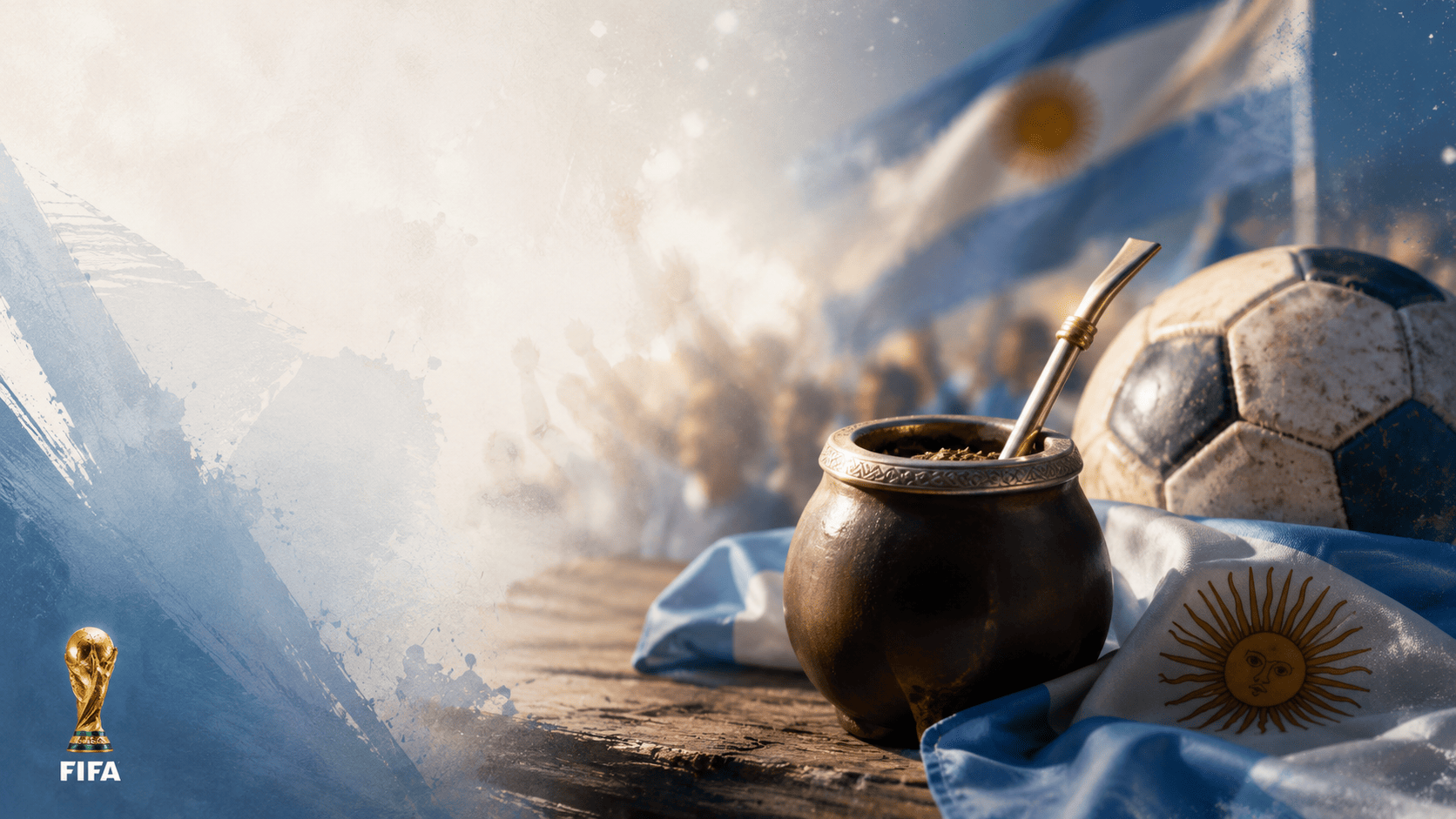
During a traditional group session, one person acts as the cebador, preparing and serving the mate. The cup is filled with yerba, hot water is added, and the first participant drinks through a filtered metal straw known as a bombilla.
The cup then returns to the cebador, who adds more water before passing it to the next person. Everyone usually drinks from the same vessel in turn.
Argentina’s cultural heritage records describe mate as an everyday practice with social, ritual and festive dimensions. It is not only something people consume; it is something they perform together.
A mate circle naturally slows a conversation down. Each participant waits for a turn. The cup moves at its own pace, giving the group time to talk, listen and remain present.
The ritual can also reduce social distance. People of different ages, occupations and backgrounds can sit within the same circle. This is why official Argentine cultural material repeatedly presents mate as a symbol of friendship, hospitality and connection between generations.
Its caffeine may provide alertness, but stimulation alone cannot explain its cultural status. Many drinks can keep a person awake. Mate is distinctive because its traditional preparation carries an invitation: make room for somebody else.
Football Arrived from Abroad but Became Unmistakably Argentine
Football reached Argentina through British influence during the nineteenth century. One of the earliest recorded matches in Buenos Aires took place in 1867, followed by an organised championship in 1891. On February 21, 1893, Alexander Watson Hutton founded the association that would eventually become the Argentine Football Association.
The game could have remained within British schools and expatriate clubs. Instead, it spread rapidly into working-class districts, railway communities and immigrant neighbourhoods.
Clubs became deeply local institutions. Each area developed its own colours, songs, heroes, enemies and interpretations of the game. Supporting a club became a way of expressing where a person came from, while the national team offered a wider identity capable of bringing rival supporters together.
Historical research describes football as one of the most important cultural signifiers of Argentine national identity. It also became one of the main ways Argentina projected itself into the world, particularly through the achievements of players such as Alfredo Di Stéfano, Diego Maradona and Lionel Messi.
Argentina did not invent football. What it did was transform the game into a local language.
The “Pibe” and the Making of an Argentine Style
During the 1920s, Argentine sports journalism helped create the symbolic figure of the pibe: the clever, street-trained boy who learned to control the ball in crowded neighbourhood spaces.
He was not presented as a physically imposing athlete developed by an elite institution. He was small, inventive and unpredictable, using skill and cunning to overcome stronger opponents.
This image helped Argentina construct a football identity that stood in contrast to the more structured English interpretation of the sport. It also provided a shared cultural figure for a society being reshaped by large waves of immigration.
Decades later, Diego Maradona appeared to embody that mythology almost perfectly. He came from a poor neighbourhood, possessed extraordinary close control and carried a confrontational relationship with both opponents and authority.
Lionel Messi offered a different version of Argentine genius. His public personality was quieter and his career became more global, but his ability to manipulate space and the ball continued the tradition of technical imagination.
Different eras produced different heroes, yet the mechanism remained familiar. The neighbourhood gives a child a ball. The family gives that child stories and loyalties. The national team turns individual talent into collective memory.
Football Is Inherited Before It Is Understood
Many Argentine children do not first encounter football through its official rules. They encounter it through family allegiance.
They learn which club their parents support. They hear stories about matches played before they were born. They watch adults react to goals, missed penalties and controversial decisions as though the events affect the emotional balance of the entire household.
Supporting a club can pass from one generation to the next, while the national team creates a temporary alliance between relatives who support rival domestic sides.
A major Argentina match is therefore never entirely self-contained. It reactivates older memories: the World Cups of 1978, 1986 and 2022, Maradona’s goals, Messi’s long pursuit of an international title, Emiliano Martínez’s saves and the songs that moved from stadiums into streets and homes.
Football becomes a way of organising personal history. People remember where they were when a decisive goal was scored, who watched with them and what happened after the final whistle.
Where Mate and Football Meet
Mate and football share the same spaces before games, on team journeys, inside dressing rooms and among supporters.
In March 2026, the Argentine Football Association announced an official yerba mate partnership and described the drink as an essential part of the national team’s dressing-room culture and the lifestyle of its leading players.
During the 2026 World Cup, Argentine supporters carried mate cups and thermoses to gatherings across North America. Fans were seen sharing the drink outside Argentina’s hotel and in Kansas City cafés, where it offered both a taste of home and an easy way to connect with curious newcomers.
The symbolism is straightforward. Mate creates a small circle of belonging. Football creates a much larger one that can include an entire neighbourhood, city or country.
Both rituals also turn waiting into something meaningful. A person waits for the mate cup to return. A supporter waits for kick-off, a scoring opportunity or a final whistle. In both cases, conversation and collective anticipation fill the space between moments.
Neither Tradition Belongs Exclusively to Argentina
Mate is not an exclusively Argentine practice. It is part of a broader regional culture shared with Uruguay, Paraguay and southern Brazil, with each community developing its own preferences regarding grinding, water temperature, vessels and preparation.
It also has a long history in Syrian and Lebanese communities and has continued spreading into new markets and cultures around the world.
Football is even more obviously global, and Argentina received the game from abroad.
What makes the Argentine experience distinctive is not ownership but reinterpretation. The country turned mate into a language of hospitality and made football a language through which it discusses class, neighbourhood, migration, hope, conflict and national ambition.
The 2026 Final Brings the Rituals Back Together
Argentina will meet Spain in the World Cup final at New York New Jersey Stadium on Sunday, July 19, 2026. Kick-off is scheduled for 10:00 p.m. Saudi Arabia time. The defending champions will attempt to become one of the rare teams to retain the trophy.
Before the match, familiar rituals will unfold again. Shirts will be taken from wardrobes. Families will arrange their seats. Friends will exchange predictions. Mate cups will move around rooms and viewing gatherings.
For Arabic-speaking football supporters, the quality of the viewing experience becomes part of that ritual. Rowad4K makes it easier to access favourite sports channels and content with picture quality reaching 4K, supported by the stability needed to follow decisive moments without losing the emotional rhythm of the occasion.
The value is not limited to seeing the ball more clearly. It lies in catching the details that later become part of the story: a player’s expression before a set piece, a manager’s reaction, the movement inside the stands and the celebration that a family may remember for years.
So Why Do Argentines Love Mate and Football?
Because both offer something deeper than consumption or entertainment.
Mate creates an intimate circle in which every participant is invited to take part. Football creates a national circle that millions can enter at the same moment.
Mate preserves everyday conversations. Football preserves victories, defeats and defining public memories. One tradition is transmitted through the preparation and passing of a cup. The other passes through shirts, songs, players and stories told by adults to children.
There is no need to choose between them. An Argentine can hold mate in one hand while watching the match, as three generations gather around the same screen.
They are different rituals serving a similar purpose: reminding people that they are not alone, and that they belong to a story that began before them and will continue after them.
Share this article