World Cup 2026 Refereeing: The VAR Decisions That Shaped a Heated Group Stage
The 2026 World Cup group stage placed referees and VAR under intense scrutiny, with marginal offsides, disputed penalties and formal complaints shaping the story of the tournament
World Cup 2026 Refereeing: The VAR Decisions That Shaped a Heated Group Stage
The 2026 FIFA World Cup group stage was not only a test of teams, tactics and nerve. It was also a major test of modern football officiating. With 48 teams, 104 matches and a new Round of 32 format, referees entered the tournament under a level of pressure rarely seen before
What made the debate especially intense was not the absence of technology, but its constant presence. VAR corrected some decisions with clinical precision, yet it also became the centre of controversy itself. In some matches, fans asked why technology had intervened. In others, they asked why it had stayed silent
That contrast defined the refereeing story of the group stage. Iran saw a historic knockout dream disappear after a marginal offside. Colombia lost a stoppage-time winner against Portugal to another razor-thin call. Ghana questioned a non-penalty decision against England. Brazil were furious after a Vinicius Junior goal was ruled out. Ecuador protested Germany’s goal after an alleged foul in the buildup. Algeria went further by filing a complaint over the officiating in their defeat to Argentina
Together, these incidents formed a wider question: is VAR making football fairer, or simply moving controversy into a more technical and less emotional language?
A Bigger Tournament, A Bigger Refereeing Burden
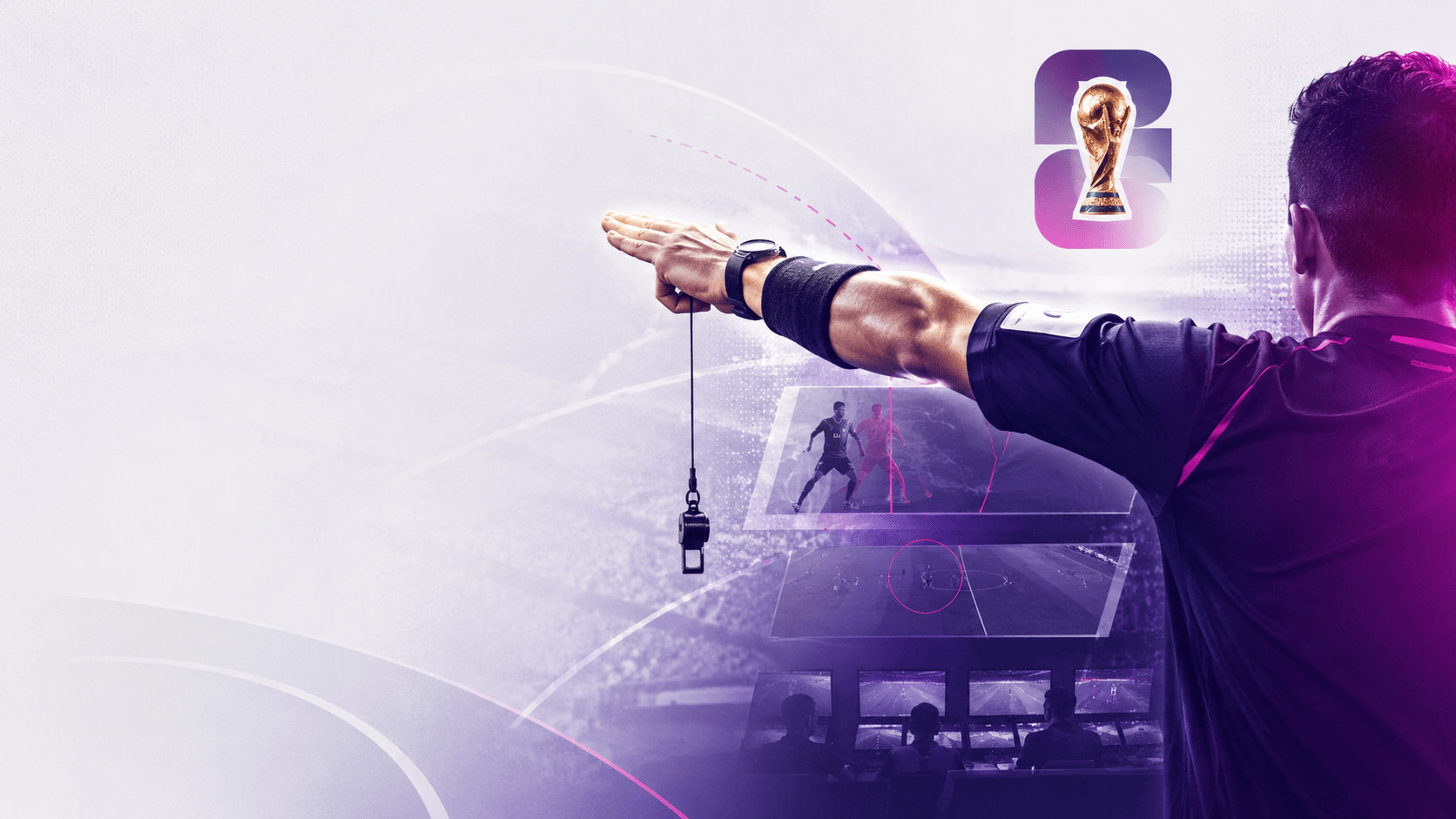
From the start, the 2026 World Cup was always going to stretch the officiating system. FIFA appointed 52 referees, 88 assistant referees and 30 video match officials for the biggest edition in tournament history. That scale matters. More matches mean more high-pressure incidents, more comparisons between decisions, and more chances for fans to question consistency
The tournament also introduced a set of rule changes designed to speed up the game and reduce time-wasting. These included five-second countdowns for throw-ins and goal kicks, stricter substitution procedures, mandatory off-field treatment periods, and expanded VAR powers in selected areas
On paper, these changes were logical. In practice, they placed referees at the heart of the spectacle. Every delay, every review and every disciplinary decision became part of the tournament’s rhythm
The opening game between Mexico and South Africa immediately set the tone, with three red cards making discipline one of the first major talking points of the World Cup. It was a reminder that referees would not be background figures in this tournament. They would be central characters
Iran vs Egypt: A Goal Ruled Out by Millimetres
The most painful VAR moment of the group stage came in Iran’s 1-1 draw with Egypt. In stoppage time, Shoja Khalilzadeh thought he had scored the goal that would send Iran into the knockout rounds for the first time. The celebration was explosive and understandable. It was the kind of late goal that defines a nation’s tournament
Then VAR intervened. The goal was ruled out for offside, with the margin described as extremely tight. In legal terms, offside is a factual decision. If the player is ahead by a part of the body that can legally score, the goal must be disallowed
But football is not experienced only in legal terms. For Iran, this was not just a disallowed goal. It was the collapse of a historic opportunity. In a format where third-place rankings can decide survival, one marginal call can reshape an entire campaign
That is why the incident struck such a nerve. The debate was not only whether the decision was technically correct. It was whether football wants its biggest emotional moments to be decided by margins invisible to the human eye
Colombia vs Portugal: The Toe That Changed the Match
Colombia experienced a similar frustration against Portugal. Davinson Sanchez believed he had scored a stoppage-time winner, only for the goal to be ruled out for a marginal offside. The decision denied Colombia a victory that would have preserved a perfect group-stage record
Again, the central issue was not necessarily whether the technology measured the position correctly. Semi-automated offside systems are designed precisely for these moments. The bigger issue was emotional and philosophical: when a player is offside by the smallest visible margin, does the decision feel fair to the game being played?
Modern football increasingly lives in that gap between accuracy and acceptance. A decision may be technically correct and still feel brutal. For players and supporters, the scoreboard changes instantly. For the system, it is simply the application of the law
Ghana vs England: The Controversy of Non-Intervention
If Iran and Colombia raised concerns about VAR being too precise, Ghana’s draw with England raised the opposite question: why does VAR sometimes not intervene?
Late in the game, Ghana appealed for a penalty after Prince Kwabena Adu appeared to be caught inside the box by Ezri Konsa. No penalty was awarded, and VAR did not overturn the decision. Ghana’s frustration was clear, especially because the match was goalless and a penalty at that stage could have changed the group picture
This is where VAR creates its most difficult trust problem. Fans do not only compare the decision in front of them with the laws of the game. They compare it with other decisions from other matches. If VAR intervenes to cancel one goal for a light contact in the buildup, why does it not intervene on a penalty claim that looks more obvious to many viewers?
The official answer is that VAR is not supposed to re-referee every incident. It should only correct clear and obvious errors. But the phrase “clear and obvious” remains subjective. What is obvious to a coach may not be obvious to a referee. What looks like a foul to supporters may look like normal contact to officials
That uncertainty is where controversy survives
Brazil vs Scotland: The Vinicius Junior Debate
Brazil’s match against Scotland added another layer to the discussion. Vinicius Junior thought he had scored after winning the ball near the edge of the box, but VAR recommended an on-field review. The referee eventually ruled that Vinicius had committed a foul in the buildup, and the goal was disallowed
Brazil still won the match, but the decision triggered frustration. The contact looked soft to many observers, and that is precisely the problem with subjective VAR interventions. Unlike offside, which is largely measured, fouls require interpretation
When VAR intervenes in a subjective contact situation, the bar is supposed to be high. It should be correcting a clear error, not searching for a minor reason to cancel a goal. For many fans, the Vinicius incident felt like the latter
That perception matters. Even when the result is not changed, trust in consistency can be damaged. Brazil’s anger was not only about one disallowed goal. It was about whether similar incidents were being judged the same way across the tournament
Germany vs Ecuador: When VAR Stayed Silent
The Germany-Ecuador match offered the opposite problem. Leroy Sane’s goal stood despite Ecuador’s protests over an alleged high-boot foul in the buildup. VAR did not intervene
Viewed in isolation, the decision may have been defensible. But in the context of the wider group-stage debate, it became another example of the uncertainty around intervention thresholds. Why was one attacking buildup reviewed and punished, while another was allowed to stand?
This is the hardest part of refereeing communication. Every decision now exists in a tournament-wide archive. Fans remember what happened yesterday and compare it with what happens today. If they cannot see a clear standard, they assume inconsistency
Algeria vs Argentina: A Formal Complaint Changes the Tone
Algeria’s complaint after the defeat to Argentina pushed the refereeing debate beyond social media and post-match frustration. The Algerian side questioned decisions involving Lionel Messi and Alexis Mac Allister, arguing that certain incidents should have been punished more severely
The sensitive part of this story is the perception of star treatment. It is not something that should be stated as fact without evidence. But when supporters and teams believe major players are judged differently, the trust issue becomes serious
World Cup matches carry enormous consequences. A missed card, an unreviewed challenge or an inconsistent disciplinary threshold can influence not only one match, but an entire route through the tournament. Algeria’s complaint highlighted how quickly refereeing frustration can become a formal institutional matter
Qatar vs Switzerland: Transparency Is Part of Accuracy
The Qatar-Switzerland controversy was different. The issue was not only the penalty itself, but the absence of the usual offside animation that helps explain the decision to viewers. FIFA later attributed the problem to a technical outage affecting the generation of the graphic, while maintaining that the VAR process itself was not affected
That distinction may be valid from an operational perspective. But for fans, transparency is part of trust. If the system says a decision is correct but fails to show the visual explanation, doubt grows
This is a key lesson for modern football. It is not enough for VAR to be accurate behind the scenes. It must also be understandable. The viewer needs to see why a decision was made, especially in a tournament where one call can decide qualification
Did Refereeing Succeed or Fail?
The fairest answer is that refereeing in the 2026 World Cup group stage did both. It succeeded in using technology to detect incredibly tight offside decisions and reduce some clear errors. It also managed a massive number of matches under intense pressure
But it struggled with consistency of perception. Fans were not only asking whether one decision was right. They were asking why similar situations seemed to produce different outcomes
That is the real challenge. VAR has improved accuracy, but accuracy alone does not guarantee acceptance. Football needs decisions to be technically sound, but also explainable, consistent and emotionally credible
How VAR Has Changed the Viewing Experience
Modern football viewing has changed. A goal no longer ends with celebration alone. There is a pause, a glance at the referee, a wait for VAR, and sometimes a complete emotional reversal
That makes the quality of the viewing experience more important than ever. In a tournament full of marginal offsides, penalty reviews and slow-motion debates, fans need clarity. They need stable access, sharp picture quality and reliable channels to understand the small details that shape big decisions
This is where Rowad4K fits naturally into the modern football experience. It is not just about watching matches. It is about following the decisive details: the offside line, the replay angle, the contact inside the box, the referee’s signal and the tactical reaction after the decision. In a World Cup shaped by fine margins, a smooth and high-quality viewing setup becomes part of how fans understand the game
Conclusion: VAR Did Not End Controversy
The old promise of VAR was simple: technology would reduce controversy. The 2026 World Cup group stage showed a more complicated reality. VAR has not ended debate. It has changed the form of debate
Fans no longer ask only whether the referee saw the incident. They ask whether VAR should have intervened, whether the threshold was consistent, whether a millimetre offside should cancel a historic goal, and whether the system communicates clearly enough
As the tournament moves into the knockout rounds, the pressure will only rise. There will be no room for recovery, no third group match to fix the damage. One decision can end a dream
For FIFA and its referees, the challenge is clear: decisions must not only be accurate. They must be consistent, transparent and understandable. Otherwise, the technology designed to protect the game will remain one of its biggest sources of controversy
Share this article